


Company Profile
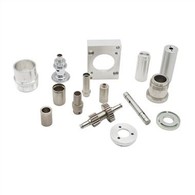
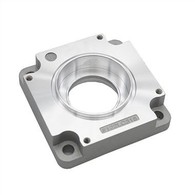
Founded in May 2006. It is a high-tech enterprise focusing on R&D, manufacturing and sales of industrial, automation and vehicle core components. The current processed products cover automation FA, robots, servo motors, encoders, automobiles , medical, high-speed rail and other fields. Provide a complete set of products and services from the shaft, CASE shell, end cover, extruded shell, radiator, gear, including die-casting, extrusion, and a complete set of mold components. Provide a complete set of products and services from the shaft, CASE shell, end cover, extruded shell, radiator, gear, including die-casting, extrusion, and a complete set of mold components. Equipment, production, service advantages, high-quality management, quality assurance, etc.
Why Choose Us
Our factory
Our automation equipment capital increase and production expansion project is included in the major project library of Dongguan City in 2020. We are the teaching practice base and engineering technology research and development center of Dongguan Institute of Technology. We have 600 excellent employees, 500 advanced equipment, and a stable organizational structure.
Our product
Provide a complete set of products and services from the shaft, CASE shell, end cover, extruded shell, radiator, gear, including die-casting, extrusion, and a complete set of mold components.
Production equipment
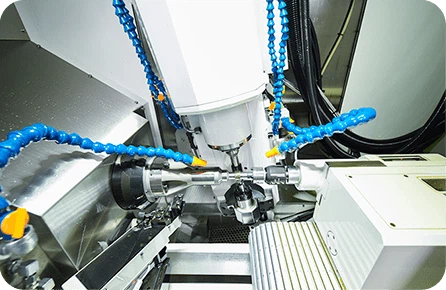
We have three independent production workshops with more than 500 sets of production equipment from Germany, Japan, Italy, Switzerland, South Korea and other countries. Including special workshops for die-casting parts (16 die-casting machines from 160-1250T, 180 CNCs), special workshops for cutting parts production (160 CNCs), and special workshops for shell production (160 CNCs).
Our service
Strict quality management system and perfect after-sales service system, so as to provide you with efficient and high-quality products and services.

Processing of precision brass turned parts with meticulous attention to detail For more than 16 years, we have been processing precision brass turned parts. Since the beginning of our establishment, we have emphasized producing high-quality parts rather than luring people in at low prices.

With the help of our production process skills, Longwin Precision can provide CNC aerospace machining parts that need specialized manufacturing solutions, including the advantages of lower cost and weight. To offer accurate accuracy of your complicated designs and rapid turnaround, our CNC machining center is equipped with a variety of in-house machining technologies, including 3-axis milling, 4-axis milling, 5-axis milling, multi-axis milling and turning, Swiss turning, and wire and plunge-cut EDM. These procedures may readily be integrated with our precise CNC aerospace machining skills to offer solutions that assist in lowering lead times and improving cost and weight.

What are the production processes of copper machining services? Nowadays, in the field of copper processing industry, there are CNC machining centers, CNC lathe processing, precision grinding machine processing and other processing equipment. Such a processing scale can be called a mechanical.

Discussion about stainless steel CNC service machining techniques The following factors of processing stainless steel are challenging: 1. A cutting force and temperature that are both high The cutting force is strong due to the material's high strength, high tangential stress, and high plastic.

Are you looking for a quicker, more affordable, and more effective solution to produce your precise components? Consider our CNC machining! Our CNC machine shop are the best option for high-volume production needs since they can quickly and accurately handle complicated geometries and angles. With the help of our expertise, you may save production costs, produce goods more quickly and with more reliability, and maintain your competitive edge. If you want to custom precision machining, to learn more about our CNC machining components, contact us right away!

Material: ADC12 or Customized.
Place of Origin: Guangdong Province, China
Technical Process: Die casting machine (LIKEN &TOYO & UBE-Japan), CNC machining center (brother-Japan).
Packing: Carton, pallet, blister box

A gear is a mechanical device that transmits motion and power by having teeth on the rim that may constantly mesh. Great precision, a wide range of applications, high efficiency, a long life, and other advantages come with gear transmission. Custom transmission gears are widely used in gearbox, machinery, automotive, electronics, textiles, printing, packaging, medical equipment, food processing, wind power, chemical, pneumatics and other fields.

The braking disc is a common thin-walled disc element. The processing contents mostly consist of turning and drilling procedures. The problem in processing is ensuring the completed product's size and form correctness.

A robot is a man-made mechanical device that can do activities autonomously and is used to replace or aid human labor. The robot's key components include electronic components, hardware parts, and plastic parts.
What Are CNC Machining Metal Gears
These CNC machining metal gears are mechanical parts with teeth on the rim, which can be continuously engaged to transmit power. These gears have good resistance to high temperature, wear and corrosion, so their service life is very long. These products are applicable to CNC machine tools, aerospace, precision modules, robot applications, scientific research applications, etc. We provide a variety of raw materials, such as C45, 40Cr, 20CrMnTi, 42CrMo, copper, stainless steel, etc.
Advantages of CNC Machining Metal Gears
Improved accuracy in metal fabrication processes
One of the most significant benefits of CNC machining metal gears in metal fabrication is the improved accuracy it offers. CNC machines can produce parts to exact specifications every time, with a level of precision that is impossible to achieve manually. This accuracy ensures that the finished product is of the highest quality and meets the customer's exact requirements.
Enhanced consistency and repeatability in manufacturing
CNC machining metal gears also offers enhanced consistency and repeatability in manufacturing, which is crucial in metal fabrication processes. Traditional manual machining methods require skilled workers to operate the machines, and each worker may have their own way of performing the task. This can result in slight variations in the finished product, even if the design specifications are the same. With CNC machining metal gears, the process is entirely automated, and the same program can be used to produce identical parts every time, ensuring consistency and repeatability.
Increased production speed and efficiency
CNC machines can operate 24/7 with minimal supervision, resulting in faster production times and increased efficiency. Traditional manual machining methods can be slow and labor-intensive and require skilled workers to operate the machines. CNC machines, on the other hand, can produce parts much faster and with less human involvement, resulting in increased productivity and efficiency.
Reduction of material waste and cost savings
Another benefit of CNC machining metal gears in metal fabrication processes is the reduction of material waste and cost savings. With traditional manual machining, there is often a higher degree of material waste due to human error, which can result in additional material costs. CNC machines can optimize the use of materials, resulting in less waste and cost savings.
For reliable performance and an extended lifespan, a gear must possess specific characteristics. Numerous materials are employed in the production of gears to impart these critical properties.
Cast Iron
Cast iron can endure repeated and sustained wear, rendering it well-suited for precision gear manufacturing. The casting process enables the production of intricate gear shapes with ease. Cast iron gears are frequently utilized in applications where smooth action is not a primary concern.
Steel
Gears made from steel alloys boast high strength as they are commonly subjected to heat treatment to improve toughness and hardness, particularly in the teeth. Notably, carbon steel is utilized in the production of helical, spur, bevel, worm, and gear racks.
Brass
A combination of copper and zinc, brass is an alloy that allows manufacturers to adjust the zinc content. Brass with low zinc levels offers greater ductility compared to other materials, and its copper base renders the metal antimicrobial and easy to machine. Typically, brass gears are employed in low-load applications such as spur gears or gear racks.
Bronze
Apart from brass, other copper alloys also contain aluminum bronze and phosphor bronze alloys. These nonmagnetic gears are most suitable for use in corrosive environments. Combining copper, tin, and phosphorus, phosphor bronze offers enhanced strength and corrosion resistance due to the presence of tin, while the addition of phosphorus improves its stiffness and wear resistance. This makes phosphor bronze gears well-suited for high-friction environments, particularly in worm gears, as the material effectively withstands the friction caused by the wheel and minimizes the effects of lubrication. Comprised of copper, aluminum, nickel, iron, and manganese, aluminum bronze exhibits exceptional resilience against wear and corrosion, making it a preferred choice for use in highly corrosive settings exposed to saltwater, oxidation, and organic acids. Moreover, its ability to thrive in high-load environments renders it suitable for applications involving worm wheels and screw gears.
Aluminum Alloys
In settings that demand gears with a high strength-to-weight ratio, aluminum alloys serve as a viable substitute for iron alloys. Additionally, gears crafted from aluminum alloys benefit from a protective surface finish called passivation, safeguarding them against corrosion and oxidation. The prevalent aluminum alloys utilized in gear manufacturing comprise 2024, 6061, and 7075. Regardless of the grade, aluminum gears are most suitable for applications with low to moderate temperatures, as they start to degrade at approximately 400 °F.
Powdered Metals
These metals consist of various combinations of metal materials, including iron-nickel steel, pre-alloyed steel, and customized blends. Additionally, their porosity contributes to quieter gear operation, and they can be made self-lubricating through vacuum impregnation with different oils.
Different Types of CNC Machining Metal Gears and Their Applications
The tooth profile contact line is a straight line parallel to the axis. A pair of tooth profiles enter or exit the mesh at the same time along the tooth width, which is easy to cause shock and noise, and the transmission stability is poor. Used to transfer power from one shaft to another parallel shaft, increasing or decreasing the torque of a given object. They are the most widely used gears and can achieve high precision and relatively easy and economical production processes. You can often find them in electric screwdrivers, oscillating nozzles, alarm clocks, washing machines, dryers, construction equipment, fuel pumps, and mills.
The meshing process between the teeth of the helical cylindrical gear is an excessive process, and the force on the teeth gradually increases from small to large, and then from large to small; helical gears are suitable for high-speed and heavy-duty Condition. The increase in the degree of coincidence improves the load-bearing capacity of the gear. Thereby extending the life of the gear. The degree of coincidence mainly depends on the meshing time, and the meshing time of the helical gear is long and the contact area is large, which reduces the stress. And make the transmission stable, and increase its economy. Progressive meshing makes helical gears run more smoothly and quietly than spur gears. Therefore, they have better tooth meshing than spur gears and superior quietness. Helical gears can transmit higher loads, which makes them ideal for high-speed applications.
Rack and pinion is a kind of gear, which includes a circular gear (pinion), which meshes with a linear gear (rack), and its function is to convert rotary motion into linear motion. The rack is a rack or rod. Drive the pinion to rotate to drive the rack linearly, and drive the rack to make the pinion rotate. Rack and pinion provide fewer mechanical advantages than other mechanisms such as recirculating balls. Speaking of the application of this kind of gear, an example is the automobile steering system, which converts the rotation of the steering wheel into the left-to-right movement of the lever.
Bevel gears are used to transmit the movement and power between two intersecting shafts. In general machinery, the angle of intersection between the two shafts of bevel gears is equal to 90° (but not equal to 90°). Similar to cylindrical gears, bevel gears have indexing cones, addendum cones, tooth root cones and base cones. The cone has a big end and a small end, and the circle corresponding to the big end is called the index circle (its radius is r), the addendum circle, the root circle and the base circle.
The worm gear structure is often used to transmit the movement and power between two interleaved shafts. The worm wheel and the worm are equivalent to the gear and the rack in the middle plane, and the worm and the screw are similar in shape. In the form of a worm meshing with a worm gear, the shape of the worm is similar to that of a spur gear. These two elements are also called worm screws and worm gears. The terms are often confused due to the imprecise use of the terms. The same unit as other gears.
Fundamental CNC Machining Metal Gears Design Parameters
There are various aspects that must be considered while building gears to ensure appropriate function.


Pitch is the spacing between adjacent gear teeth. The pitch of a gear is defined by the gear's size and the number of teeth. The module specifies the size of the gear teeth. The module is the pitch diameter divided by the number of teeth on the gear. At the point of contact between two gears, the pressure angle is the angle formed by the line of action and the tangent to the pitch circle. The size and shape of the gear teeth are influenced by the pressure angle.
Face width refers to the axial breadth of the gear teeth. The face width of the gear influences its load-carrying capacity. In helical gears, the helix angle is the angle formed by the tooth profile and the gear axis. The helix angle has an impact on the smoothness and noise level of gear operation. The radial distance from the pitch circle to the top of the gear tooth as an addendum. The addendum has an effect on the gear's strength and durability.
The radial distance from the pitch circle to the bottom of the gear tooth is measured in dedendum. The dedendum influences the clearance between meshing gear teeth. Designers can construct gears that are optimal for their individual uses by selecting the proper values for these characteristics. It is crucial to remember, however, that these characteristics are interconnected and must be balanced to guarantee that the gear runs smoothly and efficiently.
CNC Machining Metal Gears Cutting Processes
Gear Grinding
Gear grinding uses an abrasive wheel to remove material from a gear blank. The abrasive wheel will rotate at high speed and make contact with the gear blank, imparting its profile into the gear. Gear grinding does come at a high tool and energy cost, and is slower than other methods. However, this process is very precise. Figure 1 is a photo of gear grinding, the pink wheel is the grinding disc which images with the gear blank on the right of the picture.
Gear Shaping
Gear shaping is one of the oldest methods of cutting gear teeth. In the process, the profile of the cutter is the same geometry as the desired tooth. This cutting tool uses a linear motion to cut away material from the gear blank. The linear motion consists of a cutting and return stroke. The gear shaping tool has the same pitch as the pitch required for the gear tooth. Although the pitch of the tool has to meet the pitch of the teeth cut, the cutter can be used on gears that require a varying number of teeth. The advantage of gear shaping is it has a shorter production time, produces consistent results, and can create most gear types apart from the worm gear. The disadvantage of gear shaping is the cutting arm has low rigidity, so the accuracy is low. Gear shaping is a good solution for medium-sized production runs.
Gear Finishing
Gear finishing is a process used to increase surface finish and accuracy. In gear finishing, an abrasive wheel which has the same profile as the gear teeth is used to smooth the meshing surfaces of the gear. Gear finishing is very similar to gear grinding but the abrasive wheel is much finer, removing less material.
Gear Broaching
Gear broaching is a machining process that uses a special type of cutting tool called a broach. The broaching tool design leads to one of the fastest gear-cutting processes. Each broach is designed to cut a specific style/size of gear tooth, and so the price of tooling for his method is high. For this reason, gear broaching is only used for high-production parts. Gear broaching can be performed on any lathe, milling machine, machining center, or turning machine.
Gear Hobbing
Gear hobbing is performed using a helical cutting tool. Hobbing is a fast process that is best suited for medium to high production volumes. Gear hobbing is performed using a CNC hobbing machine, in which the gear blank and hobbing tool are rotated on a perpendicular axis and brought together until the teeth are all cut. This is the most accurate way to manufacture gears. Gear hobbing cannot be used to produce internal gears or spline gears.
Gear Milling
Gear milling uses a form-cutting tool on a milling machine to cut gear teeth from a gear blank. The form cutter spins to cut each gear tooth individually. Between each cut, the form cutter moves away to allow the gear blank to rotate for the next cut. Gear milling is a slow process that limits its production to only low-volume manufacturing. Gear milling is also not as precise as other machining methods. Gear milling is used because it can machine one-off custom cuts without special tooling.
Founded in May 2006. It is a high-tech enterprise focusing on R&D, manufacturing and sales of industrial, automation and vehicle core components. The current processed products cover automation FA, robots, servo motors, encoders, automobiles , medical, high-speed rail and other fields. Provide a complete set of products and services from the shaft, CASE shell, end cover, extruded shell, radiator, gear, including die-casting, extrusion, and a complete set of mold components. Provide a complete set of products and services from the shaft, CASE shell, end cover, extruded shell, radiator, gear, including die-casting, extrusion, and a complete set of mold components. Equipment, production, service advantages, high-quality management, quality assurance, etc. Our automation equipment capital increase and production expansion project is included in the major project library of Dongguan City in 2020. We are the teaching practice base and engineering technology research and development center of Dongguan Institute of Technology. We have 600 excellent employees, 500 advanced equipment, and a stable organizational structure , Strict quality management system and perfect after-sales service system, so as to provide you with efficient and high-quality products and services.


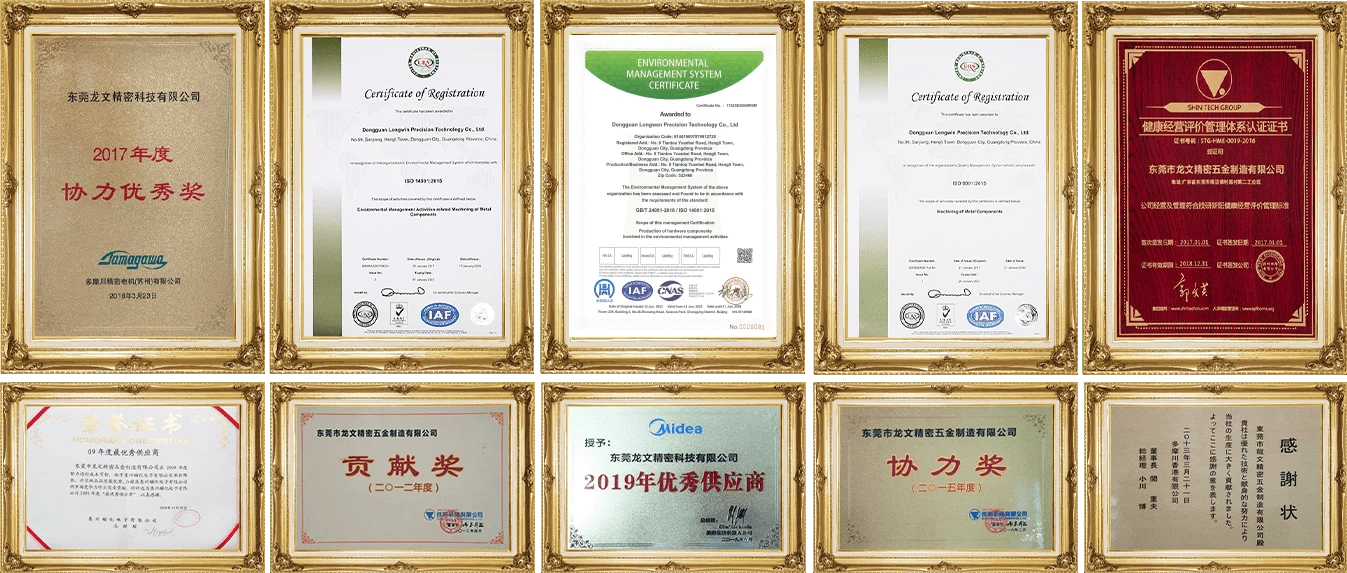
Certificates
FAQ
Hot Tags: cnc machining metal gears, China cnc machining metal gears manufacturers, suppliers, factory, custom cnc turned parts, precision cnc machining parts, stainless steel precision machining, custom milled parts, stainless spur gears, electrical components of cnc machine