


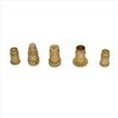
CNC Lathe Parts
Dongguan Longwin Precision Technology Co., Ltd. is a high-tech enterprise focusing on R&D, manufacturing and sales of industrial, automation and vehicle core components. The current processed products cover automation FA, robots, servo motors, encoders, automobiles , medical, high-speed rail and other fields. We specialize in the development and design of precision die-casting parts, CNC machining parts, and automatic lathe turning parts, with extensive OEM and ODM production experience, we are capable of providing you with high-quality precision metal parts, competitive prices, and excellent service.


Manufacturing Services for CNC Lathe Parts
When CNC lathe parts, the material or workpiece is held in place on the machine. It is mounted on a main spindle and rotated on various axes. CNC lathes With high degree of flexibility and programmability, their are capable of completing many complex processes, including:


Turning: A cutting tool is mounted on a moving slide. As the workpiece spins, the cutting tool is pressed against it. The slide moves up and down along the workpiece, as well as away from or closer to the center line. Turning processes are usually accessed when large amounts of material need to be quickly removed from the workpiece.
Facing: In facing, a single-point tool moves along the workpiece, removing a thinner layer of material. This process produces flat, smooth surfaces at the ends of the workpiece.
Thread Cutting: Here, the tool moves along the outside of a workpiece to create threads in the outer surface. These threads may be cut to any length or pitch.
Grooving: The tool moves along the workpiece, gradually cutting a groove into it which matches the tool's width. Multiple passes may be required to achieve a wider groove or add various geometries.
Drilling: This process uses a drill to make holes in the workpiece
Boring: Boring is often used after drilling to either make the hole larger, or to achieve more precise dimensions. It can also be used to achieve features such as tapers, steps, and contours.
Reaming: Also employed after drilling, reaming removes a precise amount of material in order to achieve a more accurate diameter and a smooth internal finish.
Tapping: This cuts a thread inside the hole, so a screw can be threaded into it.
Tapering: A conical shape is produced on the workpiece.
Parting: This process separates the workpiece after machining.
Knurling: Here, an indentation is made on the edge of the workpiece.
Chamfering: This removes burrs and produces bevels at the ends of the workpiece, to achieve a better look.
Common Types of CNC Lathe Parts Surface Finishes
Anodizing
This surface finish forms an oxide layer on the surface of the metal. This oxide layer improves the durability and corrosion resistance of the finished CNC machined parts.
Alodine Coating
Applied to metals such as aluminum, alodine coating is quite common. It produces a thin layer of protection which strengthens the link between succeeding coatings.
Black Oxide Coating
It has a wear-resistant finish that offers a dark, appealing surface. The lubricity and durability of the treated surface can be improved with black oxide coating.
Electroplating
The process of electroplating entails covering a substrate with a layer of metal. Applying this finish offers increased resistance to corrosion, enhances appearance, and adds a layer of wear protection.
Passivation
It enhances stainless steel's resilience and performance under challenging conditions.
Bead Blasting
This surface treatment facilitates the cleaning of surfaces and removes burrs while preparing it for secondary finishing.
Powder Coating
This is a dry finishing technique that involves the electrostatic application of fine powder onto the surface of parts. After the application, curing occurs to ensure treatment is permanent.
Brushing
The process of brushing involves using abrasive pads or brushes to apply a finish to a material’s surface. It is suitable for metal surfaces to improve their visual attractiveness.
Polishing
Polishing entails the use of abrasives like buffing wheels or polishing chemicals. It increases the reflectivity and aesthetic appeal of materials like metal, giving them a mirror finish.
Painting
It can give both visual appeal and corrosion protection, and it comes in a variety of color possibilities. painting are best for metals, polymers, wood, and other things.
Why Choose Us
World-Class Machine Shop
We have three independent production workshops with more than 500 sets of production equipment from Germany, Japan, Italy, Switzerland, South Korea and other countries. Including special workshops for die-casting parts, special workshops for cutting parts production, and special workshops for shell production.
Wide Range of Production and Processing
We can cylindrical products with a diameter of 1-400mm and a length of 1-1000mm can be produced; non-cylindrical products have a length range of 0.5-1000mm, a width range of 0.5-600mm, a height range of 0.5-600mm, and an accuracy of 0.002mm.
Strict Quality Inspection
We use high-precision testing equipment to ensure the high quality of all products while maintaining tight tolerances. Material test reports and material certificates are also available.
Fast Manufacturing and Delivery
Not only can we complete your products perfectly, but our factory is close to major shipping ports and can quickly deliver your products to you.
Materials That Can Be Used for CNC Lathe Parts
Aluminum
Aluminum 6061 is an all-purpose aluminum alloy often used for CNC machining. It is typically found in automotive parts, bike parts, sporting goods, and other recreational items.
Aluminum 7075 is a step up from 6061. Ideal for aerospace frames and high-performance recreational equipment, it's the strongest commercially available aluminum alloy.
Stainless Steel
303 cannot be cold-formed, heat-treated, or welded, and special care must be taken with speed/feeds and the sharpness of cutting tools during CNC manufacturing. 303 makes excellent nuts, bolts, non-marine grade fittings, shafts, and gears.
304 stainless steel is a non-magnetic, all-purpose steel for CNC machining known for its toughness.
316 stainless steel is even more corrosion-resistant than 304 or 303 thanks to the addition of molybdenum. It's strong, weldable, and one of the few marine grade stainless steels.
Carbon Steel
Carbon steel 1045 is a mild grade of carbon steel. 1045 is easy to machine, weldable, and can be hardened or heat-treated to achieve various hardnesses. This material is ideal for nuts, bolts, gears, shafts, connecting rods, and other strong, small mechanical parts. 1045 can also be used for architectural applications, but it must be surface-treated to prevent rust and corrosion.
Titanium
Known for its high strength, toughness, and corrosion resistance, titanium is often employed to manufacture parts for the most demanding aerospace, military, and industrial applications. This material is also biocompatible and suitable for use in medical device manufacturing.
Nylon
Nylon is an all-purpose, low-friction thermoplastic that is often used as an alternative to metal in CNC-manufactured parts. This material is stiff, strong, impact-resistant, chemical-resistant, but surprisingly elastic. Popular applications for nylon include electrical molding, fuel system components, gears, food packaging, fabric, and more.
Application industries of CNC Lathe Parts
Aerospace Industry
The aerospace industry constantly develops sturdy materials for constructing equipment and other gadgets.
Automotive Industry
CNC machining offers advantages at every stage of the automotive manufacturing process, from prototyping in Research and Development (R&D) to producing large quantities of parts.
Marine Industry
The marine industry relies on high-quality craftsmanship since it creates water transportation that might travel all over the globe. This is only possible with CNC machining.
Electronics Industry
The electronics industry uses CNC machining in prototyping and the production stage. An advantage CNC machining offers in electronics is the ability to handle small-scale construction with consistency.
Smartphones
The majority of smartphone construction is done with CNC manufacturing techniques.
Military and Defense Industry
The requirements of the military and defence industries are similar to those of the aerospace industries. Instead of simple parts, these industries require complex machinery for the wide range of innovative materials and sophisticated equipment they manufacture.
Healthcare Industry
CNC machining in the healthcare and medical industry is used for manufacturing medical supplies and rapid tooling to create dies for injection molding.
Energy Industry
The energy industry is still in the growth stage with the rise of green energy and renewable energy resources. CNC is the supporting pillar for making tools and equipment across the energy sector.

• Determine your requirements - Product requirements and quantity of orders
• Design and engineering - Manufacturer designs the die casting tooling
• Get a sample for testing - Offer free or charged samples depending on the products
• Prototyping - A prototype of the aluminum die casting is often created
• Production - Die casting, finishing, the desired final appearance and quality
• Quality control - Strict quality control measures are implemented
• Packaging and shipping - Carefully packed to prevent damage
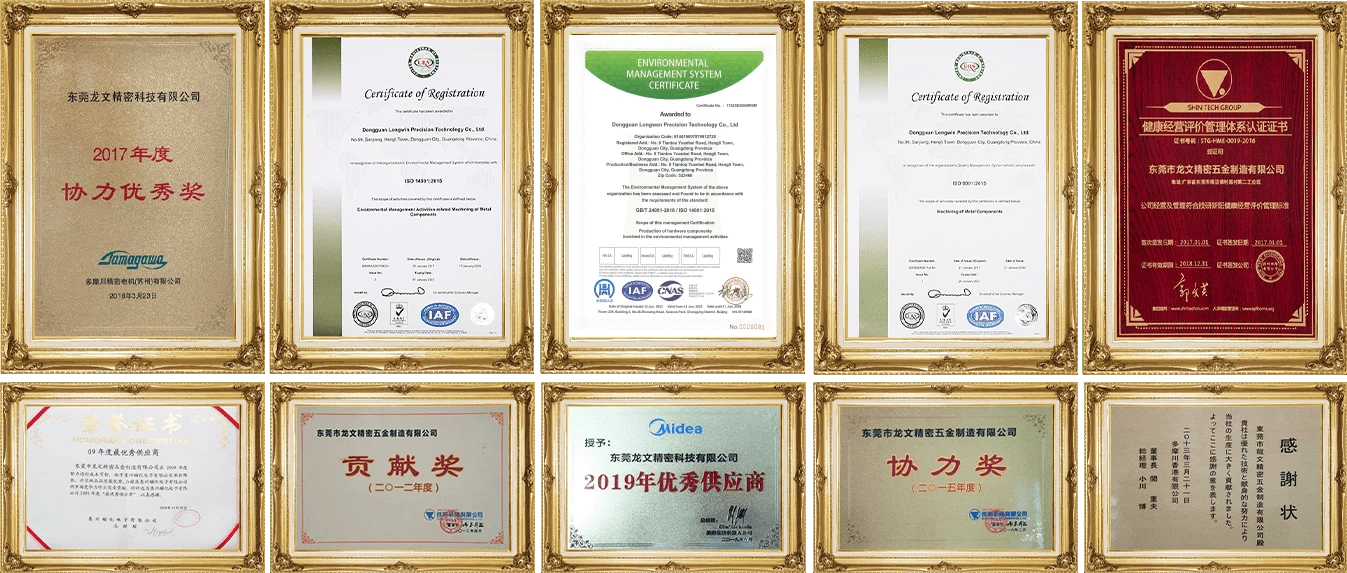
Certificate
FAQ
As one of the most professional cnc lathe parts manufacturers and suppliers in China, we're featured by quality products and competitive price. Please rest assured to buy customized cnc lathe parts from our factory. Contact us for quotation.
turning machine parts, precision cnc lathe parts, CNC Lathing Robot Axle