



Company Profile
Founded in May 2006. It is a high-tech enterprise focusing on R&D, manufacturing and sales of industrial, automation and vehicle core components. The current processed products cover automation FA, robots, servo motors, encoders, automobiles , medical, high-speed rail and other fields. Provide a complete set of products and services from the shaft, CASE shell, end cover, extruded shell, radiator, gear, including die-casting, extrusion, and a complete set of mold components. Provide a complete set of products and services from the shaft, CASE shell, end cover, extruded shell, radiator, gear, including die-casting, extrusion, and a complete set of mold components. Equipment, production, service advantages, high-quality management, quality assurance, etc.
Why Choose Us
Our factory
Our automation equipment capital increase and production expansion project is included in the major project library of Dongguan City in 2020. We are the teaching practice base and engineering technology research and development center of Dongguan Institute of Technology. We have 600 excellent employees, 500 advanced equipment, and a stable organizational structure.
Our product
Provide a complete set of products and services from the shaft, CASE shell, end cover, extruded shell, radiator, gear, including die-casting, extrusion, and a complete set of mold components.
Production equipment
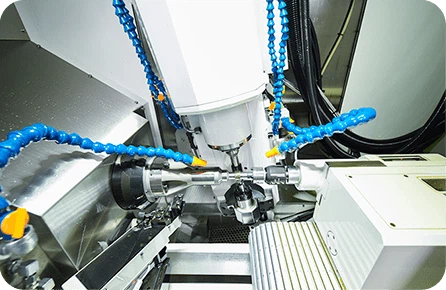
We have three independent production workshops with more than 500 sets of production equipment from Germany, Japan, Italy, Switzerland, South Korea and other countries. Including special workshops for die-casting parts (16 die-casting machines from 160-1250T, 180 CNCs), special workshops for cutting parts production (160 CNCs), and special workshops for shell production (160 CNCs).
Our service
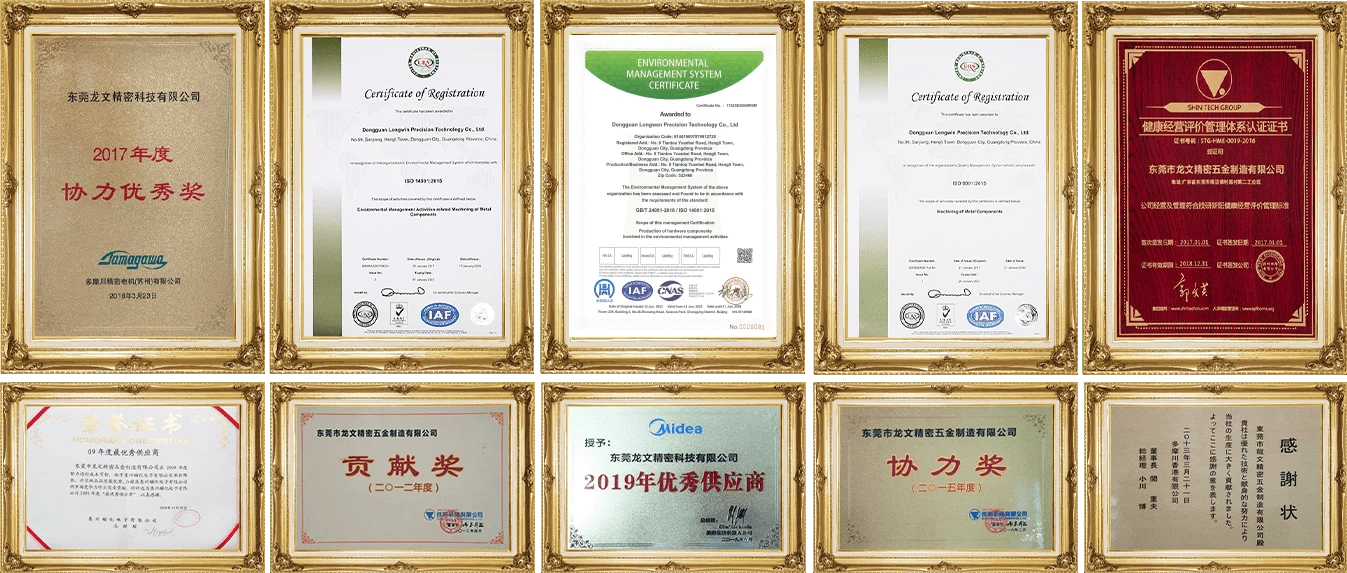
Strict quality management system and perfect after-sales service system, so as to provide you with efficient and high-quality products and services.

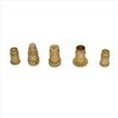
Processing of precision brass turned parts with meticulous attention to detail For more than 16 years, we have been processing precision brass turned parts. Since the beginning of our establishment, we have emphasized producing high-quality parts rather than luring people in at low prices.

With the help of our production process skills, Longwin Precision can provide CNC aerospace machining parts that need specialized manufacturing solutions, including the advantages of lower cost and weight. To offer accurate accuracy of your complicated designs and rapid turnaround, our CNC machining center is equipped with a variety of in-house machining technologies, including 3-axis milling, 4-axis milling, 5-axis milling, multi-axis milling and turning, Swiss turning, and wire and plunge-cut EDM. These procedures may readily be integrated with our precise CNC aerospace machining skills to offer solutions that assist in lowering lead times and improving cost and weight.

What are the production processes of copper machining services? Nowadays, in the field of copper processing industry, there are CNC machining centers, CNC lathe processing, precision grinding machine processing and other processing equipment. Such a processing scale can be called a mechanical.

Discussion about stainless steel CNC service machining techniques The following factors of processing stainless steel are challenging: 1. A cutting force and temperature that are both high The cutting force is strong due to the material's high strength, high tangential stress, and high plastic.

Are you looking for a quicker, more affordable, and more effective solution to produce your precise components? Consider our CNC machining! Our CNC machine shop are the best option for high-volume production needs since they can quickly and accurately handle complicated geometries and angles. With the help of our expertise, you may save production costs, produce goods more quickly and with more reliability, and maintain your competitive edge. If you want to custom precision machining, to learn more about our CNC machining components, contact us right away!

Material: ADC12 or Customized.
Place of Origin: Guangdong Province, China
Technical Process: Die casting machine (LIKEN &TOYO & UBE-Japan), CNC machining center (brother-Japan).
Packing: Carton, pallet, blister box

A gear is a mechanical component having teeth on the rim that may continuously mesh to transmit motion and power. The benefits of gear transmission include high accuracy, a wide variety of applications, high efficiency, long life, and so on.

The braking disc is a common thin-walled disc element. The processing contents mostly consist of turning and drilling procedures. The problem in processing is ensuring the completed product's size and form correctness.

A robot is a man-made mechanical device that can do activities autonomously and is used to replace or aid human labor. The robot's key components include electronic components, hardware parts, and plastic parts.
What Is Custom Transmission Gears
A gear is a mechanical device that transmits motion and power by having teeth on the rim that may constantly mesh. Great precision, a wide range of applications, high efficiency, a long life, and other advantages come with gear transmission. Custom transmission gears are widely used in gearbox, machinery, automotive, electronics, textiles, printing, packaging, medical equipment, food processing, wind power, chemical, pneumatics and other fields.
Advantages of Custom Transmission Gears
Torque multiplication
Custom transmission gears can increase the torque output of a motor or engine. This is achieved by reducing the rotational speed of the motor or engine and increasing the torque at the output shaft.
Speed reduction
Custom transmission gears can be used to reduce the speed of a motor or engine. This is useful in applications where high speeds are not necessary, such as in heavy machinery.
Versatility
Custom transmission gears are versatile and can be used in a wide range of applications. They can be customized to suit specific requirements and can be used in both high and low-power applications.
Durability
Custom transmission gears are designed to be durable and can withstand high loads and stresses. They are made from high-quality materials and are built to last.
The transmission gearbox is used to provide the gear reduction needed to transform the high speed of the engine to the requisite speed to drive the wheels. The gear box is the chief component of the transmission system. The gearboxes are different for manual and automatic transmissions. Manual transmissions usually have five or six gears in the gearboxes. When the driver presses the clutch down, the sliding gear gets engaged with the appropriate gear. There are higher and lower gears which when engaged with the sliding gear provide high and low speeds, respectively. Modern manual gearboxes employ a diagonal gear that keeps the sliding gear synchronized with the main gears. This design prevents the gears from clashing with one another.
Automatic transmissions use an automatic gearbox that allows the transmission to select the right gear, without having the driver to choose. A hydraulic system monitors the pressure of fluids in the engine and engages the appropriate gear with the help of a torque converter, with respect to the engine fluid's pressure. The torque converter engages the higher or lower gears, depending on whether the fluid pressure is high or low, respectively.
The gearboxes in the front and rear wheel drive units are different. Front-wheel drive (FWD) gearbox: The typical FWD unit is compact and will house the gears (known as the gear set, kit or cluster), the final drive and the differential. Typically, there will be two shafts with gears on them- an input shaft and below it, an output shaft. Each pair of gears is constantly meshing, but only one pair is fixed to the shafts at any given time.
Rear-wheel drive (RWD) gearbox: A typical RWD gearbox will have three shafts - input, lay shaft and output. The input and output shafts run in line with each other but are mechanically separated. The lay shaft sits beneath the two and overlaps them.
The input shaft constantly drives the lay shaft through a pair of meshing gears: This is known as "constant mesh". The lay shaft and output shaft have a pair of gears rotating on them and from the constant mesh gearing onwards, it behaves in a similar way to the FWD gearbox. The main extra aspect is that if the box features a direct ratio, usually fourth, there will be a system to lock the two shafts together, bypassing the gear cluster.
Graph Theory Based Custom Transmission Gears Chain Configuration Modelling


Gear drives are complex mechanical systems which are used in nearly all types of machinery, such as robots, aircraft and automobile. The design of a gear drive is a tedious and time-consuming process that depends largely on the experiences and intuitions of the designer. In the early design stage, a large number of complicated problems have to be taken into consideration as well as many influence factors. Configuration of the gear transmission chain is one of the important considerations. The configuration of the gear transmission chain is the way in which all its parts, such as the gears, shafts, bearings, couplings and clutches, are connected together in order for the gear transmission system to transfer power and motion. It is an important decision made in early design stage of a gear transmission. Decisions made in these early design stages often have significant influences on the full-life-cycle product properties such as costs, performances, reliabilities, safeties, maintenances and etc., and any glitches in these stages can substantially increase difficulties in later design and manufacturing. The configuration of the transmission chain affects many important system properties, such as the reduction ratios, the system level proficiencies, the system dynamic characteristics and even forces that transferred by each part. Modelling and assessing of the configuration are key problems in the early design stage of a gear drive, and the configuration model can be a foundation for further analysis and evaluation.
However, the modelling of the configuration of a gear transmission chain is rarely covered by previous researches. It summarized the use of graph theory in gears analysis and pointed out that the ideas of using graph mainly consists in automation of analysis, automatic generation of all possible solutions for a certain purpose, optimizations and etc. It presented a generalized solution to design multi-stage gear drives which focused on the solving of dimensional design and optimization. It presented an automatic design method for multi-stage gear drives with configuration design without detailed configuration modelling. On the other hand, many progresses on configuration design appeared in artificial intelligence researches, most of which were carried out with top-down modelling processes and concentrated on automatic configuration generation.
This conception is a bottom-up modelling approach and can be used to analysis and evaluate a gear transmission chain configuration. The conception is based on engineering drawing models and as well as graph-theoretic models. The engineering model is represented by a predefined collection of primitive part models. The primitive part models include spur gears, shafts and bearings. These primitives not only cover the style of gear transmission, but also the underlying physical concepts along with their engineering knowledge, such as physical and geometric compatibilities, engineering/geometric constraints and etc. The graph model is comprised of interconnected nodes which are iconic representation of the predefined primitive part models. The nodes are connected through lines that are symbolic representation of power or torque transmission path. Engineering knowledge about the transmission chain is embedded in the graph based model through the nodes and lines. Thus the configuration model carries enough information for further analysis, and can be used as a skeleton for the following detailed design and development.
Geometry and General Custom Transmission Gears
When two gears with an unequal number of teeth engage, the mechanical advantage makes their rotational speeds and torques different. In the simplest setups, gears are flat with spur teeth (with edges parallel to the shaft) and the input gear's shaft is parallel to that of the output. Spur gears mostly roll through meshing, so can be 98% or more efficient per reduction stage. However, there is some sliding between tooth surfaces, and initial tooth-to-tooth contact occurs along the whole tooth width at once, causing small shock loads that induce noise and wear. Sometimes lubrication helps mitigate these issues.
In slightly more complex setups, parallel-axis gearsets have helical gears that engage at an angle between 90° and 180° for more tooth contact and higher torque capacity. Helical reducers are suitable for higher-horsepower applications where long-term operational efficiency is more important than initial cost. Helical gear teeth engage gradually over the tooth faces for quieter and smoother operation than spur gearsets. They also tend to have higher load capacities.
One caveat: Angled tooth contact generates thrust that the machine frame must resolve. No matter the subtype, most parallel-axis gearsets have gear teeth with tailored involute profiles-customized versions of the rolled trace off a circle with an imaginary string. Here, mating gears have tangent pitch circles for smooth rolling engagement that minimizes slipping. A related value, the pitch point, is where one gear initially contacts its mate's pitch point.
Involute gearsets also have an action path that passes through the pitch point tangent to a base circle. Besides parallel-axis gearsets, there are non-parallel and right-angle gearsets. These have input and output shafts that protrude in different directions to give engineers more mounting and design options. The gear teeth of such gearsets are either bevel (straight, spiral or zerol), worm, hypoid, skew or crossed-axis helical gears. The most common are bevel gearsets with teeth cut on an angular or conical shape.
Hypoid gears are much like spiral-bevel gearsets, but the input and output shaft axes don't intersect, so it's easier to integrate supports. In contrast, zerol gearsets have curved teeth that align with the shaft to minimize thrust loads.
How To Select the Right Custom Transmission Gears
Size
Size refers to the physical dimensions and characteristics of the gears and the overall gear system. It can significantly impact the component's performance, efficiency, and applicability. When examining the size of the drive, keep the following points in mind.
Required Torque
The torque loads necessary for an application are contingent on the precise components and forces applied. Typically, these loads are established by computing the pressure exerted on the system and dividing it by the effective radius. This calculation yields the required torque load to set the system in motion.
Radial or Axial Loading
Radial load refers to a force acting outward from the center of a circle or sphere. It commonly arises from centrifugal forces or external pressure. On the other hand, axial load is the power applied along the axis of a cylinder or shaft. It usually comes from pushing or pulling actions.
Duty Cycle
The duty cycle represents the proportion of time an application is actively utilized relative to its total available time. It divides the time the application has been operating by the full period it exists. For example, if an application is active for 8 hours each day, the duty cycle is 33%.
Performance Capability
Performance capability is the gear drive's ability to meet a given application's functional and operational requirements. It encompasses the following factors that directly influence the components efficiency, reliability, and overall suitability for the intended use.
Horsepower and Input Speed Requirements
The necessary horsepower and input speed depend on the application and the motor's size. Different applications necessitate an engine with higher horsepower or input speed than others. Consulting with a knowledgeable motor supplier or engineer is crucial to identify the appropriate motor.
Target Output Speed or Torque
Analyzing the system's needs and requirements allows determining the desired output speed or torque. This process involves carefully considering factors such as the application, environment, motor type, and power source, contributing significantly to the outcome.
Gearbox Mounting
Gearbox mounting affixes a gearbox to a machine, enabling it to power the system. This usually entails using bolts or welding to attach the gearbox firmly to the vehicle or machine's frame or chassis. Moreover, it ensures a secure and robust attachment that can withstand the forces exerted by the driving system.
Right-Hand or Left-Hand Rotation
The primary distinction between the gearboxes' right-hand and left-hand rotation is in the output shaft's position. This placement is crucial for determining the direction of the output shaft's rotation and power transmission.
Ambient Temperature
A gear drive should be installed in environments where the ambient temperature falls within the specified operating range provided by the manufacturer. Operating gears in temperatures exceeding their capacity can lead to overheating and decreased performance.
Moisture
The corrosive effects of moisture can weaken gear teeth, shafts, bearings, and other vital components within the system. This can result in premature wear and tear, reduced efficiency, and, in extreme cases, catastrophic failure of the drive.
Contaminants
The presence of dust, dirt, and other particles in the environment can pose issues to the reliable operation of the drives. Therefore, they must be installed in contaminant-free settings to ensure optimal performance and longevity.
Vibration
Vibration is a dynamic force that transmits oscillations through the system. It can arise from various sources, including machinery, rotating equipment, or external environmental factors. The impact of excessive vibration or shock can lead to accelerated wear and premature failure of crucial components.
Founded in May 2006. It is a high-tech enterprise focusing on R&D, manufacturing and sales of industrial, automation and vehicle core components. The current processed products cover automation FA, robots, servo motors, encoders, automobiles , medical, high-speed rail and other fields. Provide a complete set of products and services from the shaft, CASE shell, end cover, extruded shell, radiator, gear, including die-casting, extrusion, and a complete set of mold components. Provide a complete set of products and services from the shaft, CASE shell, end cover, extruded shell, radiator, gear, including die-casting, extrusion, and a complete set of mold components. Equipment, production, service advantages, high-quality management, quality assurance, etc. Our automation equipment capital increase and production expansion project is included in the major project library of Dongguan City in 2020. We are the teaching practice base and engineering technology research and development center of Dongguan Institute of Technology. We have 600 excellent employees, 500 advanced equipment, and a stable organizational structure , Strict quality management system and perfect after-sales service system, so as to provide you with efficient and high-quality products and services.


Certificates
FAQ
Hot Tags: custom transmission gears, China custom transmission gears manufacturers, suppliers, factory, vmc machine spare parts, rapid precision machining, precision cnc machining parts, CNC Machining Servo Motor Parts, Precision CNC Machinery Parts, motor end cover


