


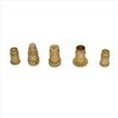

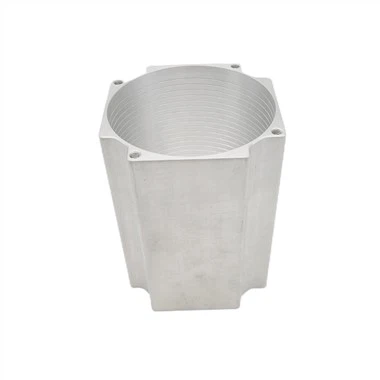
Longwin established in May 2006, has been a leading high-precision metal parts manufacturer for 17 years, with extensive OEM and ODM production experience. We specialize in the development and design of precision die-casting parts, CNC machining parts, and automatic lathe turning parts. Our capabilities include producing cylindrical products with diameters ranging from 1mm to 400mm and lengths ranging from 1mm to 1000mm. For non-cylindrical products, the length can range from 0.5mm to 1000mm, width from 0.5mm to 600mm, and height from 0.5mm to 600mm, with an accuracy of up to 0.002mm. In 2015, we developed a high-precision planetary gearbox for our customers. Our products are widely used in automotive controllers, servo motors, encoders, reducers, and robots. With a factory building area of 64,000 square meters, 600 employees, 500 CNC machining equipment, 16 die-casting machines ranging from 160 to 1250 tons, and 30 types of testing and measuring instruments, we are capable of providing you with high-quality precision metal parts, competitive prices, and excellent service.






Why choose us
High quality
Our products are manufactured or executed to very high standards, using the finest materials and manufacturing processes.
Professional team
Our professional team collaborate and communicate effectively with one another, and are committed to delivering high-quality results. They are capable of handling complex challenges and projects that require their specialized expertise and experience.
Long warranty
The long-term warranty is designed to give consumers more confidence that their purchases and services will continue to be valid.
Rich experience
Dedicated to strict quality control and attentive customer service, our experienced staff is always available to discuss your requirements and ensure complete customer satisfactio

CNC machining flange, meaning rims, are symmetrical disc-like components that are used to attach or seal pipes, containers, or fixed-shaft mechanical pieces. These disc-shaped components are most frequently found in plumbing and are typically used in pairs. There are also different types of fasteners and threaded fixings are used to secure the flanges in place.
Easy assembly at tight spaces where wrenches might not have clearance if you install traditional flange fittings. They are more easily assembled with moderate torque.
Hard-to-reach areas where you need flexibility, you can eliminate the need for adapters in the hose line, pipe, or tube.
Pipe connections, tubes, or large hose connections where you find high pressure, vibration, or shock pressures are present, that could more easily damage the traditional large hydraulic fittings.
Making connections allows for easy maintenance in rigid lines like metal tubes or continuous pipes.
Reduce the chance of components becoming loose in rigorous hydraulic applications.

Why choose us
High quality
Our products are manufactured or executed to very high standards, using the finest materials and manufacturing processes.
Professional team
Our professional team collaborate and communicate effectively with one another, and are committed to delivering high-quality results. They are capable of handling complex challenges and projects that require their specialized expertise and experience.
Long warranty
The long-term warranty is designed to give consumers more confidence that their purchases and services will continue to be valid.
Rich experience
Dedicated to strict quality control and attentive customer service, our experienced staff is always available to discuss your requirements and ensure complete customer satisfactio
CNC machining flange, meaning rims, are symmetrical disc-like components that are used to attach or seal pipes, containers, or fixed-shaft mechanical pieces. These disc-shaped components are most frequently found in plumbing and are typically used in pairs. There are also different types of fasteners and threaded fixings are used to secure the flanges in place.
Easy assembly at tight spaces where wrenches might not have clearance if you install traditional flange fittings. They are more easily assembled with moderate torque.
Hard-to-reach areas where you need flexibility, you can eliminate the need for adapters in the hose line, pipe, or tube.
Pipe connections, tubes, or large hose connections where you find high pressure, vibration, or shock pressures are present, that could more easily damage the traditional large hydraulic fittings.
Making connections allows for easy maintenance in rigid lines like metal tubes or continuous pipes.
Reduce the chance of components becoming loose in rigorous hydraulic applications.
Types of CNC Machining Flange
Blind flange
A blind flange is a flat plate with bolt holes that is used to close the end of a piping system. It is commonly used in applications where future expansion or maintenance may be required. Blind flanges are also used to cap off pipes or valves that are not in use. They are available in a range of sizes and materials to suit different applications.
Weldneck flange
A weldneck flange is a type of flange that has a long tapered hub and a neck that is welded to the pipe. The neck provides reinforcement to the pipe and allows for easy alignment during installation. Weldneck flanges are commonly used in high-pressure applications or in pipelines that carry corrosive fluids. They are available in various sizes and materials.
Slip on flange
A slip-on flange is a flat plate with a bore that slips over the end of a pipe. The flange is then welded to the pipe, creating a secure and leak-proof joint. Slip-on flanges are commonly used in low-pressure applications or in pipelines that carry non-corrosive fluids. They are available in a range of sizes and materials.
Socket weld flange
A socket weld flange is a type of flange that is welded to the pipe using a socket weld connection. The socket weld connection provides a high-strength joint and allows for easy alignment during installation. Socket weld flanges are commonly used in high-pressure applications or in pipelines that carry corrosive fluids. They are available in various sizes and materials.
Threaded flange
A threaded flange is a type of flange that has threads on the inside bore and outside diameter. The flange is screwed onto the pipe, creating a secure and leak-proof joint. Threaded flanges are commonly used in low-pressure applications or in pipelines that carry non-corrosive fluids. They are available in a range of sizes and materials.
Lap joint flange
A lap joint flange is a type of flange that is used with a stub end. The stub end is welded to the pipe, and the lap joint flange is bolted to the stub end. Lap joint flanges are commonly used in applications where frequent disassembly is required. They are available in various sizes and materials.
Long weldneck flange
A long weldneck flange is similar to a weldneck flange, but it has a longer neck. The longer neck provides additional reinforcement to the pipe and allows for easy alignment during installation. Long weldneck flanges are commonly used in high-pressure applications or in pipelines that carry corrosive fluids. They are available in various sizes and materials.

Steel is the most common flange material and has higher carbon content for applications requiring superior strength. Stainless Steel is used when high durability and corrosion resistance is required.
Application of CNC Machining Flange
Flanges are used to connect pipes together to create a strong and reliable connection. They are commonly used in plumbing, gas, and oil industries.
Flanges are used to connect valves to pipes and other equipment. They ensure a secure and leak-free connection.
Flanges are used to connect pumps to pipes and other equipment. They help to reduce vibration and prevent leaks.
Flanges are used to connect heat exchangers to pipes and other equipment. They ensure a secure and tight connection to prevent leaks.
Flanges are used to connect pressure vessels to pipes and other equipment. They help to ensure the safety and reliability of the pressure vessel.
Choosing the right flange for your specific needs requires considering several factors, including the following:
Material: Flanges come in different materials, including carbon steel, stainless steel, and alloy steel. The material you choose depends on the application and the environment.
Pressure Rating: Flanges have different pressure ratings, which determine their suitability for specific applications. It is essential to choose a flange with the appropriate pressure rating for your application.
Temperature Range
Flanges have different temperature ranges, which determine their suitability for specific applications. It is essential to choose a flange with the appropriate temperature range for your application.
Size
Flanges come in different sizes, and it is essential to choose a flange that fits your pipe or equipment.
Type
Flanges come in different types, including slip-on, weld neck, threaded, lap joint, and socket weld. It is essential to choose the right type of flange for your application.
Process of CNC Machining Flange
Material selection
The first step in the Flange Machining Process is the selection of suitable materials. Flanges are commonly made from metals such as carbon steel, stainless steel, or alloy steel, chosen based on the specific application requirements such as temperature, pressure, and corrosive environment.
Cutting and shaping
The chosen material is then chopped and shaped after being chosen. Large metal plates are initially divided into smaller pieces to achieve the necessary size for the flange. Then, in preparation for further processing, the formed portions are heated to an appropriate temperature.
Forming and forging
The metal parts become pliable during the heating process, enabling the formation of the correct flange shape. Different methods, such hot forging or cold forging, can be used. In cold forging, the metal is shaped at normal temperature, but in hot forging, the heated metal is fashioned using a die under high pressure.
Machining
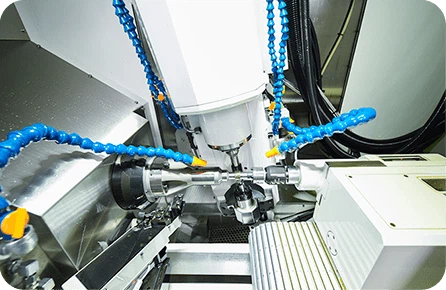
The flange is machined to attain exact tolerances and to refine its dimensions after the initial forging and forming. This comprises procedures like chamfering edges, facing sealing surfaces, and drilling holes for bolt connections. Precision and automated machining are frequently accomplished with CNC (Computer Numerical Control) machines.
Heat treatment
The flanges may go through heat treatment procedures including annealing, quenching, or tempering according on the material and use. The strength, hardness, and resistance to wear and corrosion of the flange are improved through heat treatment, which also increases its mechanical qualities.
Inspection and quality control
A crucial step in the production of flanges is quality control. To make sure they adhere to the necessary norms and specifications, flanges go through a thorough inspection process. Dimensional inspections, surface finish analysis, and non-destructive testing techniques like ultrasonic or magnetic particle testing are all included in this to look for any flaws.
Surface finishing
Flanges may be subjected to surface finishing procedures like grinding or polishing to obtain the desired smoothness, get rid of surface flaws, and enhance their overall appearance.
Coating or plating
Flanges may go through coating or plating treatments to increase their ability to withstand corrosion or offer additional protection. Galvanising, epoxy coating, or the use of corrosion-resistant metals are popular alternatives.
Final inspection and packaging
The flanges go through a final examination after the production process is finished to make sure they adhere to all the necessary requirements and quality standards. To avoid any damage during storage and shipping, they are neatly wrapped.
How to Maintain CNC Machining Flange
Visual inspections
Regularly inspect flange connections for signs of leakage, corrosion, or damage. Check for loose bolts, distorted gaskets, or flange face erosion. Address any abnormalities promptly.
Bolt tightening
Over time, bolts may loosen due to vibration or thermal cycling. lmplement a regular bolt tightening schedule using proper torque values. Consider using torque-indicating devices or tensioning methods for accurate bolt preload.
Casket replacement
Gaskets can degrade or fail over time, leading to leaks. Monitor gasket condition and replace as necessary. Choose gaskets compatible with the fluid, temperature, and pressure conditions in your system.
Flange face cleaning
Keep flange faces clean and free from debris, dirt, or residual gasket material. Use appropriate cleaning methods to avoid damaging the flange surface. Ensure that the flange face is smooth and flat for proper sealing.
Lubrication and corrosion protection
Apply suitable lubricants to bolts and nuts to facilitate proper tightening and prevent seizing. Utilize corrosion protection methods such as coatings or inhibitors to safeguard flanges against corrosion.
Leakage
If a flange is leaking, first assess the source of the leak. It could be due to a faulty gasket, improper bolt tightening, or damaged flange surfaces. Address the specific cause accordingly by replacing the gasket, re-tightening bolts, or resurfacing the flange.
Bolt failure
Bolts may break or fail under excessive loads or corrosion. Inspect bolts regularly for signs of damage, and replace any compromised bolts promptly. Consider using higher-grade or corrosion-resistant bolts when necessary.
Flange misalignment
lmproper alignment can lead to uneven stress distribution and potential leaks. Ensure proper alignment during installation and periodically check for any misalignment issues. Realign flanges if necessary using appropriate tools and techniques.
Corrosion
Flanges are susceptible to corrosion, especially in corrosive environments. Regularly inspect flanges for signs of corrosion and apply suitable protective measures. Consider utilizing corrosion-resistant materials or coatings for enhanced durability.
How the CNC Machining Flange Works
A CNC machining flange connection is an assembly involving two pieces of equipment, pipes or pipe fittings, two flanges, flange mats, and bolts. Different types of washers are also used with the flange connection to secure the connection.
A CNC machining flange connection culminates in joining two materials using inner and outer lip parts or flanges. For each of the opposing flange faces to form a seal, force (gasket compression or sealing pressure) must be exerted and maintained. To ensure flanges stay in place, they are often bolted with a gasket between the flange faces to form a tight seal. One of the gaskets often used for this sealing is a disk spring, which is a type of spring.
Characteristics of CNC Machining Flange
- Flanges have accurately drilled holes for easy assembly.
- They have controlled grain flow for optimal strength and stiffness.
- To facilitate good welding, flanges are machined bevels.
- For unrestricted flow when used for piping system, flanges are smooth and have accurate bore.
- This component has spot-facing to ensure fastener seating stays true and square.
Certifications


Our Factory
Founded in May 2006. It is a high-tech enterprise focusing on R&D, manufacturing and sales of industrial, automation and vehicle core components.
The current processed products cover automation FA, robots, servo motors, encoders, automobiles , medical, high-speed rail and other fields.


FAQ
Hot Tags: cnc machining flange, China cnc machining flange manufacturers, suppliers, factory, cnc mechanical parts, titanium cnc parts, cnc precision machining components, Servo Motor End Cover, aluminium extrusion cnc, rack and pinion cnc parts


