


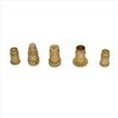

Longwin established in May 2006, has been a leading high-precision metal parts manufacturer for 17 years, with extensive OEM and ODM production experience. We specialize in the development and design of precision die-casting parts, CNC machining parts, and automatic lathe turning parts. Our capabilities include producing cylindrical products with diameters ranging from 1mm to 400mm and lengths ranging from 1mm to 1000mm. For non-cylindrical products, the length can range from 0.5mm to 1000mm, width from 0.5mm to 600mm, and height from 0.5mm to 600mm, with an accuracy of up to 0.002mm. In 2015, we developed a high-precision planetary gearbox for our customers. Our products are widely used in automotive controllers, servo motors, encoders, reducers, and robots. With a factory building area of 64,000 square meters, 600 employees, 500 CNC machining equipment, 16 die-casting machines ranging from 160 to 1250 tons, and 30 types of testing and measuring instruments, we are capable of providing you with high-quality precision metal parts, competitive prices, and excellent service.


Why choose us
High quality
Our products are manufactured or executed to very high standards, using the finest materials and manufacturing processes.
Professional team
Our professional team collaborate and communicate effectively with one another, and are committed to delivering high-quality results. They are capable of handling complex challenges and projects that require their specialized expertise and experience.
Long warranty
The long-term warranty is designed to give consumers more confidence that their purchases and services will continue to be valid.
Rich experience
Dedicated to strict quality control and attentive customer service, our experienced staff is always available to discuss your requirements and ensure complete customer satisfactio

CNC gear shafts provide the rotation that allows one gear to engage with and turn another and contain gear teeth integrated into the shaft. A gear shaft with the gearing profiles at each end are called intersecting shaft gears.
Benefits of CNC Gear Shaft
Increased precision
With CNC Gear Shafts, a higher level of precision achieved gear tooth profile. gear ratio and gear center distance. This can result in smoother operation, improved efficiency, and reduced wear and tear.
Improved performance
CNC Gear Shafts optimized for specific applications. which can lead to improved performance and reliability. This may include reducing vibration, minimizing noise, or increasing torque.
Reduced downtime
Because CNC Gear Shafts designed to fit a specific machine or application. they are less likely to fail and cause downtime. This can lead to increased productivity and cost savings over time.
Competitive advantage
CNC Gear Shafts can give companies a competitive advantage. by providing a unique solution that tailored to their specific needs. This can help to differentiate their products and services from competitors.
Types of CNC Gear Shaft
Spur gear
Spur gears transmit power through shafts that are parallel. The teeth of the spur gears are parallel to the shaft axis. This causes the gears to produce radial reaction loads on the shaft, but not axial loads. Spur gears tend to be noisier than helical gears because they operate with a single line of contact between teeth. While the teeth are rolling through mesh, they roll off of contact with one tooth and accelerate to contact with the next tooth. This is different than helical gears, which have more than one tooth in contact and transmit torque more smoothly.
Helical gear
Helical gears have teeth that are oriented at an angle to the shaft, unlike spur gears which are parallel. This causes more than one tooth to be in contact during operation and helical gears can carry more load than spur gears. Due to the load sharing between teeth, this arrangement also allows helical gears to operate smoother and quieter than spur gears. Helical gears produce a thrust load during operation which needs to be considered when they are used. Most enclosed gear drives use helical gears.
Double helical gear
Double helical gears are a variation of helical gears in which two helical faces are placed next to each other with a gap separating them. Each face has identical, but opposite, helix angles. Employing a double helical set of gears eliminates thrust loads and offers the possibility of even greater tooth overlap and smoother operation. Like the helical gear, double helical gears are commonly used in enclosed gear drives.
Herringbone gear
Herringbone gears are very similar to the double helical gear, but they do not have a gap separating the two helical faces. Herringbone gears are typically smaller than the comparable double helical and are ideally suited for high shock and vibration applications. Herringbone gearing is not used very often due to their manufacturing difficulties and high cost.
Bevel gear
Bevel gears are most commonly used to transmit power between shafts that intersect at a 90 degree angle. They are used in applications where a right angle gear drive is required. Bevel gears are generally more costly and are not able to transmit as much torque, per size, as a parallel shaft arrangement.
Worm gear
Worm gears transmit power through right angles on non-intersecting shafts. Worm gears produce thrust load and are good for high shock load applications but offer very low efficiency in comparison to the other gears. Due to this low efficiency, they are often used in lower horsepower applications.
Hypoid gear
Hypoid gears look very much like a spiral bevel gear, but unlike spiral bevel gears, they operate on shafts which do not intersect. In the hypoid arrangement because the pinion is set on a different plane than the gear, the shafts are supported by the bearings on either end of the shaft.
Gear shafts play a critical role in gear assemblies, transmitting power from the gear to the driven component. Common materials for gear shafts include alloy steels, such as 4140 steel or 4340 steel. These materials offer high strength, toughness, and resistance to fatigue, ensuring reliable performance and durability.

Application of CNC Gear Shaft
Gears apply to almost everything that we use in our daily life. However, manufacturers use it to build certain applications depending on its specific structure and design. Several gears are available in an array of commercial, residential, and industrial usages. The following is the application of gears:
The automobile industry, like, cars, bikes, and other transportation, uses gears during manufacturing
Washing machines have gears
Gears are applicable in railways and trains
Gears are used in water systems, clocks, and pumps
Gears are applicable in the toy industry
Gears are also available in marine systems
Gears are also used in aerospace and aircraft industries widely
Household appliances and dryers use gear
Material handling, lifts, and elevators need gears
Manufacturers use them in weighing scales and other measuring instruments
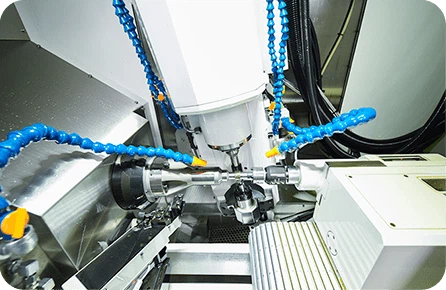
The process of shaft manufacturing can be broken down into five main steps: roughing, turning, grinding, finishing, and packing. Roughing is the initial step in the manufacturing process and is when the shaft is essentially chopped into pieces. Turning is when the pieces are shaped into a desired shape and is done using a milling machine. Grinding is when the shaft pieces are reduced in size and shape by using a series of grinding stones. Finishing is when the shaft pieces are sanded and polished to create a smooth surface. Finally, packing is where the finished shafts are boxed for shipping.
The roughing stage of the process is where the shaft pieces are essentially chopped into smaller sizes. This step is important because it ensures that all of the parts of the shaft are accurately cut. The turning stage is where the shaft pieces are shaped into their final form. This step uses a milling machine to shape the shaft pieces into their desired shape. The grinding stage reduces the size and shape of the shaft pieces by using a series of grinding stones. The final stage of the process, finishing, polishes and sandals the shaft pieces to create a smooth surface. Finally, packing takes place where the finished shaft
CNC Gear Shaft Working Principle
Gears are mechanical, toothed transmission parts used to transmit power and motion between machine sections, and in this post, we explain the various forms of gear shafts available and how they operate. Performance in mated pairs is determined by gears mounted on their teeth and the teeth of another facing gear or toothed part which avoids slippage.
Each gear or toothed part is connected to a machine shaft or base section, so once the driving gear (i.e. the gear that supplies the initial rotational input) circulates along with its shaft section, the driven gear (i.e. the toothed component or gear which is affected by the driving gear and provides the final output) rotates or transforms its shaft component.
Due to the modeling and structure of the gear pair, the transference of moving between the driven shaft and the driving shaft can cause a variation of the rotation direction or movement direction. In addition, if the gears do not have the same sizes, the system or machine experiences a mechanical advantage that permits a modification in the output torque and speed (i.e. the load which results in an object rotating).
CNC Gear Shaft Working Principle


Gears are mechanical, toothed transmission parts used to transmit power and motion between machine sections, and in this post, we explain the various forms of gear shafts available and how they operate. Performance in mated pairs is determined by gears mounted on their teeth and the teeth of another facing gear or toothed part which avoids slippage.
Each gear or toothed part is connected to a machine shaft or base section, so once the driving gear (i.e. the gear that supplies the initial rotational input) circulates along with its shaft section, the driven gear (i.e. the toothed component or gear which is affected by the driving gear and provides the final output) rotates or transforms its shaft component.
Due to the modeling and structure of the gear pair, the transference of moving between the driven shaft and the driving shaft can cause a variation of the rotation direction or movement direction. In addition, if the gears do not have the same sizes, the system or machine experiences a mechanical advantage that permits a modification in the output torque and speed (i.e. the load which results in an object rotating).
Gear shafts are used in a variety of mechanical instruments, and, consequently, several various kinds and models are existence. The suitability of each form of gear shaft and its precise design for a power or motion transmission application is based on the requirements and features of the application. Some of the principal characteristics which may be considered when modeling and choosing a gear shaft include:
Operational and environmental conditions
The operational conditions of the gear shaft application mainly affect the optimal kind and design of gear as the situations can affect the gear's operation and durability. Some of the operational states which may affect a gear shaft are the noise and vibration created, the amount of weight applied, and friction and stress that happened on the teeth, while some of the environmental states which may influence a gear shaft contain humidity, temperature, sanitation, and cleanliness.
These situations affect a variety of gear shaft design factors including the surface treatments, construction material, and lubrication type and method.
Dimensional restrictions
Beyond the environmental and operational conditions of the application, gear shafts and their modeling are also restricted by the dimensional factors e.g. physical space of the mechanical system.
For instance, gears are commonly mounted on the center distances between the system shafts although some cases may need regulation of the center distances to better set within the dimensions of the mechanical machine, which requires a profile shift (i.e. deviation from the normal tooth profile). This deviation from the typical profile commonly means adjusting-either decreasing or increasing-the tooth's thickness. This regulation varies the center distance, as well as the strength of the teeth.
Transmission requirements
Gears are used to transmit the torque and motion between machine elements in mechanical systems. According to the construction and design of the gear shaft used, gears can vary the direction of motion and/or increase the output torque and speed. The features and requirements of the particular cases-i.e. whether they require to modify direction, increase torque or speed, or both-affect the required and optimal gear shaft form, modeling, and configuration.
Design standards
There are a lot of specifications for systems using gear shafts. But unfortunately, no universal industrial tips exist which specify how a gear shaft should be modeled and created. Usually, gear shafts are constructed either to the norms set by the individual constructors or to suit the model and features of a special system or machine rather than those devices being modeled around a standard gear part.
The former case makes it more problematic to determine the appropriate gear type and model for an application among the standard parts existence from gear shaft manufacturers, whereas the latter case causes more problems and cost of finding replacements for the customized component.
Costs
When creating a custom gear, the cost of production is affected by multiple factors containing the construction material, gear design, precision standards, surface treatments and finishes, and lubricant and lubrication approaches. Industry professionals and procurements agents also require to notice the longevity and durability of the custom gear shaft to evaluate the optimal maintenance and replacement schedule.
It is necessary to select a gear shaft that efficiently meets the requirements of the case. However, it is also essential to keep in mind the total lifecycle costs-i.e. the gear repair, production, maintenance, and replacement costs-of the selected gear shaft to identify whether the system is worth the investment or not. For some cases, a typical, off-the-shelf gear shaft may meet the demands at a much lower price.
How to Maintain CNC Gear Shaft
Regular inspections
Perform routine visual inspections of the gear system to detect any signs of wear, damage, or misalignment. Check for abnormal noise, vibration, or leakage. Inspect gears, bearings, seals, and lubrication conditions.
Lubricant monitoring
Monitor the condition of the lubricant regularly. Check for contamination, degradation, or insufficient levels. Perform oil analysis to assess viscosity, particle contamination, and lubricant condition. Change the lubricant as recommended by the manufacturer.
Gear meshing inspection
Periodically inspect the gear meshing to ensure proper tooth engagement and alignment. Check for abnormal wear patterns, scoring, pitting, or tooth damage. Address any issues promptly to prevent further damage.
Bearing maintenance
Pay attention to bearing performance and conditions. Monitor for excessive noise, vibration, or temperature. Regularly lubricate bearings as per manufacturer recommendations. Replace bearings when signs of wear or damage are observed.
Sealing and protection
Ensure proper sealing and protection of the gear system against contaminants, moisture, and environmental factors. Replace damaged or worn seals and gaskets. Keep the gear housing clean and free from debris.
Temperature monitoring
Monitor the operating temperature of the gear system. Abnormal temperature increases can indicate issues such as overloading, insufficient lubrication, or misalignment. Address temperature abnormalities promptly to avoid gear system failure.
Maintenance records
Maintain comprehensive records of maintenance activities, inspections, and repairs performed on the gear system. This information helps track the gear system's history, identify recurring issues, and plan maintenance tasks effectively.
Professional assistance
If you encounter complex issues or challenges during installation or maintenance, consider seeking assistance from qualified gear engineers or technicians. Their expertise can help diagnose and address problems effectively.
Certifications


Our Factory
Founded in May 2006. It is a high-tech enterprise focusing on R&D, manufacturing and sales of industrial, automation and vehicle core components.
The current processed products cover automation FA, robots, servo motors, encoders, automobiles , medical, high-speed rail and other fields.


FAQ
Hot Tags: cnc gear shaft, China cnc gear shaft manufacturers, suppliers, factory, cnc metal parts, cnc precision mechanical parts, cnc frame parts, cnc metal gears, high volume precision turned parts, cnc aluminum radiator


