


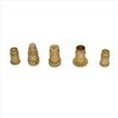
Not all materials can be precisely processed in the processing of mechanical parts, and the processing of mechanical parts has very strict requirements on materials. So do you know what materials are generally used for mechanical parts processing?
There are two categories of materials for precision machining, metallic materials and non-metallic materials.
For metal materials, the hardness is the highest for stainless steel, followed by cast iron, followed by copper, and finally aluminum. The processing of ceramics, plastics, etc. belongs to the processing of non-metallic materials.
1. The first is the requirement for the hardness of the material. For some occasions, the higher the hardness of the material, the better. It is only limited to the hardness requirements of the processing parts. The processed material should not be too hard. If it is harder than the cutting tools, it cannot be processed.
2. Secondly, the material is moderately soft and hard, at least one grade lower than the hardness of the cutting tools. At the same time, it also depends on the function of the processed device and the reasonable selection of materials for the cutting tools.
In short, precision machining still has some requirements for materials, not all materials are suitable for processing, such as materials that are too soft or too hard, the former is not necessary for processing, while the latter cannot be processed.
Therefore, the most basic one is that you must pay attention to the density of the material before processing. If the density is too high, it is equivalent to a high hardness. If the hardness exceeds the hardness of the cutting tool, it cannot be processed. Not only will it not only damage the parts, but also cause danger, such as the turning tool flying out and hurting people. Therefore, generally speaking, for mechanical processing, the material should be lower than the hardness of the cutting tools, so that it can be processed.