


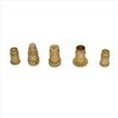
In the machining sector, we will run into this issue with stainless steel precision machining: stainless steel precision machining is difficult, but we don't realize that the choice of cutting tools is what makes it difficult. Next, we will discuss the tool's material as well as the causes of and fixes for the challenges associated with the precise machining of custom made stainless steel parts:
1. When turning stainless steel on a CNC lathe, YG6, YG8, YT15, YT30, YW1, YW2, and other materials are frequently used as cemented carbide tool materials, while W18Cr4V, w6m05cr4v2al, etc. are frequently used as high-speed steel tools.
Second, it's crucial to carefully consider the geometry and structure of the tool:
Rake angle: Tools made of stainless steel may typically be turned with a rake angle between 10° and 20°.
Back angle: typically between 5 and 8 degrees, with a maximum of 10 degrees.
Edge inclination: In general, λ is -10°~30°..
The cutting edge's surface roughness ranges between ra0.4 and ra0.2.
Third, the following are challenges encountered with precision machining custom made stainless steel parts:
1. Processing hardness speeds up tool wear and makes chip removal challenging.
2. The limited heat conductivity causes the knife edge to bend plastically and hastens tool wear.
3. The chip buildup can easily leave behind fine powder on the cutting nail's edge, leading to a subpar processing surface.
4. The work hardening and heat conductivity of the material to be processed are poor due to the chemical interaction between the tool and the material to be processed, which not only readily produces abnormal wear but also may cause the tool edge to collapse and abnormal fracture.
Fourth, the following approaches can be used to overcome the challenges of precise machining of stainless steel:
1. Make use of thermally efficient tools.
2. Sharp edge line: The chip breaker has a wide edge band, which can reduce the cutting pressure and make the removal of chips well controlled.
3. Optimal cutting circumstances: Poor processing circumstances will shorten the tool's lifespan.
4. Select the proper tool: Stainless steel tools should have good toughness, and the cutting edge strength and coating adhesion should also be relatively high.