


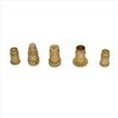
Advantages of die casting process
Die casting parts have a wide range of applications, including lamps and radiators, auto parts, furniture and bathroom hardware, electronic and electrical accessories, jewelry accessories, building materials, tableware, toys, sporting goods, gifts, and mechanical hardware accessories. They also have high dimensional accuracy, automatic production is possible, high casting strength, and low surface roughness.
Disadvantages of die casting process
1) The flow condition is unstable due to the fast speed of filling the cavity with liquid metal during die casting, therefore the general die casting method is used; the casting is easy to develop holes and heat treatment is difficult;
2) For castings with intricate concaves, die casting is more challenging;
3) High melting point alloys like copper, ferrous metals, etc. have even shorter die-casting mold life, which is only approximately 80,000 mold repetitions for aluminum alloy and magnesium alloy;
4). It is not appropriate for small batch production for a variety of reasons, chief among them being the high manufacturing cost of the die casting mold, the high production efficiency of the die casting machine, and the uneconomical of small batch production;
5) Anodic oxidation following die casting of aluminum alloys is difficult to achieve; however, at the moment several producers employ specialized aluminum alloys to do so, albeit the yield rate is still low;