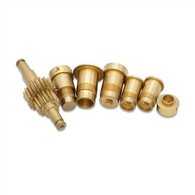


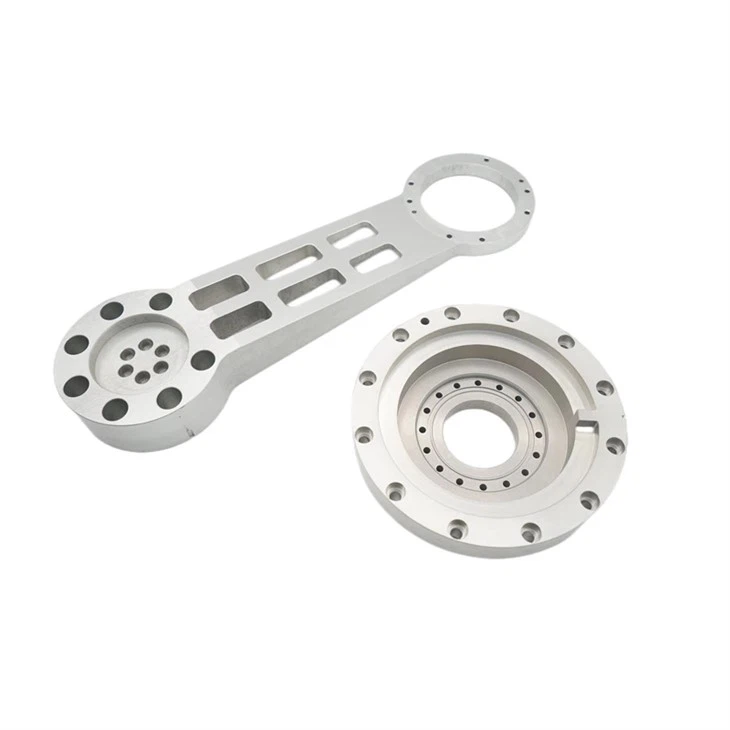
Longwin established in May 2006, has been a leading high-precision metal parts manufacturer for 17 years, with extensive OEM and ODM production experience. We specialize in the development and design of precision die-casting parts, CNC machining parts, and automatic lathe turning parts. Our capabilities include producing cylindrical products with diameters ranging from 1mm to 400mm and lengths ranging from 1mm to 1000mm. For non-cylindrical products, the length can range from 0.5mm to 1000mm, width from 0.5mm to 600mm, and height from 0.5mm to 600mm, with an accuracy of up to 0.002mm. In 2015, we developed a high-precision planetary gearbox for our customers. Our products are widely used in automotive controllers, servo motors, encoders, reducers, and robots. With a factory building area of 64,000 square meters, 600 employees, 500 CNC machining equipment, 16 die-casting machines ranging from 160 to 1250 tons, and 30 types of testing and measuring instruments, we are capable of providing you with high-quality precision metal parts, competitive prices, and excellent service.



Why choose us
High quality
Our products are manufactured or executed to very high standards, using the finest materials and manufacturing processes.
Professional team
Our professional team collaborate and communicate effectively with one another, and are committed to delivering high-quality results. They are capable of handling complex challenges and projects that require their specialized expertise and experience.
Long warranty
The long-term warranty is designed to give consumers more confidence that their purchases and services will continue to be valid.
Rich experience
Dedicated to strict quality control and attentive customer service, our experienced staff is always available to discuss your requirements and ensure complete customer satisfactio

CNC spline shafts are cylindrical shafts with teeth or ridges that facilitate the transmission torque between mechanical components. They're used in a wide array of industries, including automotive, agricultural, locomotive, general industrial, manufacturing, extrusion machinery, and more.
1.Torque transmission
Splined shafts are designed to transmit higher torques compared to plain shafts. The interlocking splines provide a larger contact surface area, ensuring efficient power transfer.
2. alignment
The intermeshing splines and grooves ensure that the shaft and its mating component maintain accurate rotational alignment, reducing the chances of misalignment and subsequent wear.
3.Ease of assembly and disassembly
Splined shafts can be easily connected or disconnected from their mating components, facilitating maintenance and component replacement.

04
Anti-rotational feature
The design of splined shafts prevents unwanted relative rotation between interconnected components, ensuring synchronized movement and functionality.
05
Durability
Due to the even distribution of load across the splines, these shafts tend to have a longer lifespan and are less prone to wear and tear than plain or keyed shafts.
06
Compact design
Splined connections are often more compact than other alternatives, allowing for sleeker machinery designs and efficient use of space.
07
Reduced slippage
The interlocking nature of the splines ensures minimal slippage, even under high torque conditions, leading to consistent performance.
Types of CNC Spline Shaft
Spline shafts are designed to have one of two types of splines: internal or external. These types can be used in combinations to transfer torque through a system. There are numerous types of spline shafts, including, involute splines, which have short, curved, and evenly spaced teeth; parallel splines, which are short, straight sided splines; serrated splines, which are V shaped; and helical splines, which are built for optimal load sharing. Each type of spline has its own advantages and disadvantages, involute splines for example, provide more surface contact for a better transfer of torque, and their design reduces the risk of misalignment with mating pieces.
Stainless steel and its benefits
Stainless steel, commonly used in spline shaft construction, is renowned for its corrosion resistance and strength. This material ensures durability, even in challenging environments, making splined shafts more reliable. Its non-reactive nature and excellent wear resistance position stainless steel as a top choice for long-lasting, efficient spline shafts.
Carbon steel and its unique properties
Carbon steel, a favored material for spline shaft construction, boasts strength and malleability. It balances durability and machinability, making it ideal for intricate spline designs. Its cost-effectiveness and robustness make carbon steel a go-to choice for many industrial and automotive applications.
Alloy steels and their role
Alloy steel, infused with chromium and molybdenum, is used in spline shaft construction for its enhanced properties. Offering increased strength and wear resistance, it withstands demanding conditions better than standard steel. Its versatility and adaptability make alloy steel preferred for high-performance spline shafts.
Aluminum alloys and their advantages
Aluminum alloys, lightweight yet strong, are employed in spline shaft construction for applications demanding reduced weight. These alloys resist corrosion effectively and provide a good strength-to-weight ratio, ensuring durability without compromising performance. Their malleability allows for intricate spline designs, making them versatile in various industries.
Application of CNC Spline Shaft
Automobile industry
Description: Splined shafts are integral to various automotive systems, ensuring smooth power transmission and precise alignment.
Example: In cars, splined shafts are commonly found in the transmission system. They connect the gearbox to the driveshaft, allowing efficient power transfer from the engine to the wheels. Steering columns often utilize splined shafts to ensure a secure connection between the steering wheel and the steering mechanism.
Aviation industry
Description: In aerospace, splined shafts are pivotal in propeller and rotor assemblies.
Example: In helicopters, the main rotor shaft often features splines that mesh with corresponding grooves in the rotor hub. This connection ensures that the engine's power is efficiently transferred to the rotor blades, allowing for controlled and stable flight.
Industrial machinery
Description: Splined shafts are ubiquitous in manufacturing units, aiding in the smooth operation of various machines.
Example: In conveyor systems, splined shafts can connect motors to conveyor belts, ensuring synchronized movement. This ensures that items move smoothly along the production line without any hitches or delays.
Agricultural equipment
Description: Farm machinery often uses splined shafts for power transmission and rotational tasks.
Example: Tractors utilize splined shafts in their power take-off (PTO) systems. The PTO shaft transfers the tractor's power to attached implements, such as mowers or harvesters, enabling them to operate efficiently.
Marine applications
Description: In marine environments, splined shafts are used in propulsion systems and other machinery.
Example: In boats, the propeller shaft often has splines that connect to the engine's output. This ensures that the engine's power is directly transferred to the propeller, propelling the boat forward.
Power tools
Description: Many handheld and stationary power tools employ splined shafts for torque transmission and tool attachment.
Example: Electric drills often have splined shafts that connect the motor to the drill bit chuck. This design ensures that the motor's rotational power is efficiently transferred to the drill bit, allowing for effective drilling.
Process of CNC Spline Shaft
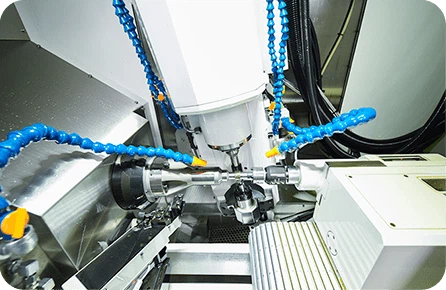
Serrations and involute splines can be achieved through the milling process. During the process, the cutting tool rotates axially along the surface of the shaft to remove the unwanted particles forming the splines. The milling machines allow the workpiece to rotate as the cutting tool continues to generate splines around the workpiece.
The hobbing process can produce all types of external splines. A hobbing machine uses a cutting tool called the 'hob' that rotates with the workpiece removing material from the spaces between each spline tooth.
Both external and internal splines can be produced using the shaping process. The shape cutter which looks like a disc has a cutting edge on one side with teeth or projection, pressure angle, and diametric pitch. As the workpiece and cutting tool rotates, each tooth is generated from those tight-spaced cuts. The tool cuts back and forth as it rotates in one direction and retracts a bit to prevent interference on the return stroke.
Broaching is more beneficial to female splines or internal splines. The cutting tool called the broach has an accurate number of teeth and a precise profile of the desired internal spline. Broaching can be linear which means the broach cuts linearly against the workpiece. On the other hand, rotary broaching uses a rotating broach that is pressed into the workpiece. Each cutting edge has an increasing form of the desired spline profile. At the end of the process, the last rows of cutting edges produce the final spline profile.
Another method that can produce internal splines is slotting. The cutting tool moves up and down as it feeds into the workpiece. Upon reaching the desired depth, the cutting tool retracts and the workpiece is indexed. The process is then repeated until all areas are machined.
The Importance of Maintaining CNC Spline Shaft
Proper maintenance of spline shafts is vital for several reasons:
Preventing wear and damage: Over time, spline teeth can experience wear due to friction and stress. Regular maintenance can help identify early signs of wear and prevent further damage.
Ensuring precision: Spline shafts often operate in precision machinery. Any deviation in their performance can lead to decreased accuracy and efficiency. Maintenance helps maintain precise tolerances.
Extending lifespan: Well-maintained spline shafts have a longer lifespan, reducing the need for costly replacements and downtime.
Here are some key maintenance practices to keep your spline shafts in optimal condition:
Regular inspection: Periodically inspect the spline shaft for signs of wear, corrosion, or damage. Look for any abnormalities in the spline teeth, such as chipping or rounding.
Cleaning: Remove dirt, debris, and contaminants from the spline shaft. Cleanliness is crucial to preventing premature wear and reducing friction.
Measurement and tolerance checking: Measure the spline teeth to ensure they remain within specified tolerances. If they are out of tolerance, it may be necessary to repair or replace the shaft.
Alignment: Check the alignment of the spline shaft in the assembly. Misalignment can lead to uneven wear and reduced performance.
Corrosion prevention: Apply appropriate coatings or treatments to protect the spline shaft from corrosion, especially in environments with exposure to moisture or chemicals.

Spline shafts are designed to maximize the amount of contact between the shaft surface and interlocking parts. When used for anti-rotary applications, a spline shaft locks into place, preventing rotation while still allowing for linear motion. When acting as a linear guard, the interlocked bearing or gear will often slide up or down the shaft to ensure accurate linear movement without allowing unwanted rotation.
When used in rotary applications, splined shafts rotate while interlocked with a gear, bearing, or other mechanism. The high level of contact between mated surfaces helps to transmit high levels of force, or torque, between mechanisms. There are a variety of splined shaft designs specifically tailored to the needs of particular power transmission applications.
How to Choose the Right CNC Spline Shaft
Key considerations in choosing a CNC spline shaft


Spline type: Spline shafts come in various types, including involute splines, straight-sided splines, and serrated splines, each with unique tooth profiles. The choice of spline type depends on factors such as load capacity, torque requirements, and application-specific needs.
Material: The material of the spline shaft affects its durability and performance. Common materials include steel, stainless steel, and aluminum. Consider factors like corrosion resistance, temperature tolerance, and the application's environment when selecting the material.
Tooth profile: The tooth profile of the spline shaft can significantly impact its performance. Involute splines offer smooth power transmission and are commonly used in high-torque applications. Straight-sided splines are easier to manufacture and may be suitable for lighter loads.
Tolerance and fit: Ensure that the spline shaft's tolerances match the mating component. Proper fit is essential for the efficient transfer of power and torque.
Length and diameter: Consider the length and diameter of the spline shaft in relation to your application's requirements. Oversized or undersized shafts can lead to inefficiencies or compatibility issues.
Load capacity: Determine the expected load capacity of the spline shaft. This includes both axial and radial loads. Different spline designs are better suited to handle various load types.
Environmental conditions: Take into account the operating environment. For example, if the shaft will be exposed to moisture or chemicals, corrosion resistance is critical.
Precision requirements: Some applications demand extremely high levels of precision. Ensure that the spline shaft's manufacturing and tolerances meet these requirements.
Certifications


Our Factory
Founded in May 2006. It is a high-tech enterprise focusing on R&D, manufacturing and sales of industrial, automation and vehicle core components.
The current processed products cover automation FA, robots, servo motors, encoders, automobiles , medical, high-speed rail and other fields.


FAQ
Hot Tags: cnc spline shaft, China cnc spline shaft manufacturers, suppliers, factory, motor end cover, stainless steel precision machining, extruded aluminum cnc, cnc router machine spare parts, Precision Anodized Aluminium CNC Machining Parts, custom machined components