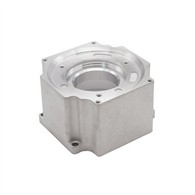


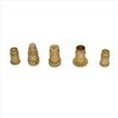

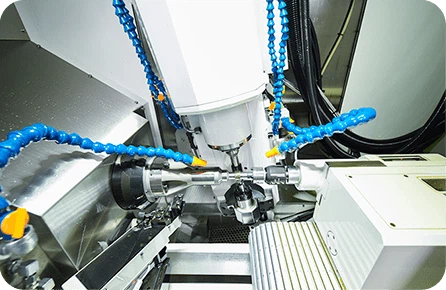
Longwin established in May 2006, has been a leading high-precision metal parts manufacturer for 17 years, with extensive OEM and ODM production experience. We specialize in the development and design of precision die-casting parts, CNC machining parts, and automatic lathe turning parts. Our capabilities include producing cylindrical products with diameters ranging from 1mm to 400mm and lengths ranging from 1mm to 1000mm. For non-cylindrical products, the length can range from 0.5mm to 1000mm, width from 0.5mm to 600mm, and height from 0.5mm to 600mm, with an accuracy of up to 0.002mm. In 2015, we developed a high-precision planetary gearbox for our customers. Our products are widely used in automotive controllers, servo motors, encoders, reducers, and robots. With a factory building area of 64,000 square meters, 600 employees, 500 CNC machining equipment, 16 die-casting machines ranging from 160 to 1250 tons, and 30 types of testing and measuring instruments, we are capable of providing you with high-quality precision metal parts, competitive prices, and excellent service.


A diecast heatsink uses the cast process by forcing molten metal under high pressure into a molded cavity. The molded cavity of the diecast heatsink is created using a hardened tool steel die which is carefully machined into a predesignated shape. The casting equipment and the metal dies represent large capital cost which tend to limit the process to high volume production applications.
Benefits of Die Cast Heat Sink
Heat sinks help maintain a consistent operating temperature, which helps improve the reliability of a device.
Heat sinks remove waste heat from a device that would otherwise reduce its lifespan.
Devices like CPUs, for example, operate most effectively when cool. An effective heat sink can improve the performance of a device.
If a passive heat sink can be used, then a cooling fan may not be necessary. This will ultimately reduce the noise of the device.
A heat sink allows the use of cheaper components to do the same job, resulting in an overall lower production cost and price to consumers.
Passive heat sinks
A passive heat sink is the simplest type of heat sink. It is simply a base with fins. Heat is transferred primarily through natural convection. As the air around the fins heats up through conduction, the hot air will rise, which will then cause cooler air to replace the hot air. This is a continuous process. These types of heat sinks are not the most effective.
Hybrid heat sinks
A hybrid heat sink makes use of a control system to decide when to employ passive or active behavior. When the heat source produces low levels of heat, the fan or pump is not turned on, because natural convection is sufficient to transfer the required amount of heat away from the heat source. When natural convection is not adequate, the fan is activated, and forced convection helps to increase the amount of heat transferred away from the source.
Active heat sinks
An active heat sink makes use of forced convection to transfer heat. When a fan or pump causes fluid flow over the heat sink, this constant flow keeps replacing the hot fluid around the heat sink with cooler fluid. The higher the flow rate, the higher the heat transfer rate. Active heat sinks are more effective than passive heat sinks.
Material of Die Cast Heat Sink
Die Cast Heat Sinks are made from materials with high thermal conductivity. The most common of these are listed below.
Aluminum: Aluminum is a lightweight, low-cost material that has good thermal conductivity. It is commonly used in heat sinks for electronic devices, such as computers and LED lights.
Copper: Copper has excellent thermal conductivity and can be used on more sensitive components like computer CPUs.
Aluminum Alloys: Pure aluminum can be difficult to work with as it is too soft, aluminum alloys like 1050 have increased strength without significantly affecting heat transfer while 6 series alloys are even stronger but sacrifice thermal conductivity.
Graphite: Graphite has conductivity approaching that of copper but is significantly lighter.
Diamond: Diamond has significantly better heat conductivity than copper, however its cost makes it impractical in most applications, it is typically used in semiconductor applications.
Application of Die Cast Heat Sink


Computer processors
Computer processors (CPUs) produce a large amount of waste heat during operation. They often employ copper heat sinks with an active cooling fan. Cool CPUs can operate more effectively.
LED lighting
LED lights don't produce heat in the same way an incandescent bulb does. However, the electronics used to make an LED work produce a lot of waste heat that must be transferred away. Small LEDs often use passive heat sinks.
Power electronics
Power supplies convert AC power to DC power for consumer electronics. This conversion process is inefficient and produces some waste heat that can reduce the life of the power supply unit. Heat sinks on power electronics sometimes employ hybrid cooling and make use of aluminum heat sinks to reduce cost.
Automotive industry
Apart from the heat sinks used on the control circuitry of vehicles, heat sinks are also used to keep electric motors cool during operation as well as to cool onboard chargers for electric vehicles.
Aerospace industry
Heat sinks can be found on control circuitry used in aerospace applications. They are also used on spacecraft to transfer heat to the vacuum of space. However, these heat sinks transfer heat purely through radiation as there is no heat transfer fluid in space.
Consumer electronics
Consumer electronics make extensive use of heat sinks to keep devices cool and operating efficiently. Typical examples include the heat sinks in computers and cell phones.
In the process to manufacture a diecast heatsink, two halves of a die are required in the die casting process. One half is called the "cover die half" and the other is called the "ejector die half". A parting line is created on the part where the two die halves meet. The die is designed so that the finished casting will slide off the cover half of the die and remain in the ejector half as the die is opened. The ejector half contains ejector pins to push the casting out of the ejector die half. In order to prevent damage to the casting, an ejector pin plate accurately drives all of the pins out of the ejector die at the same time and with the same force. The ejector pin plate also retracts the pins after ejecting the casting to prepare for the next shot.
Extrusion
Extrusion, the process of forcing hot metal billets through a steel die, is the most common way of making aluminum heat sinks. It is a fast, effective, and economic method for making heat sinks out of ductile materials like aluminum 1050. Extruded aluminum heat sinks are typically anodized before use.
Skiving
Skiving or scarfing, the process of cutting material into slices, is a common manufacturing process for the production of plate fin and flared fin heat sinks. The process allows for thinner and more closely packed fins than extrusion, and also provides a level or surface roughness, which slightly increases the total surface area.
Casting
Casting, the process of pouring molten metal into a mold, is another way to make heat sinks - aluminum or copper. Pressure die cast heat sinks can have a high level of complexity and offer excellent mechanical properties. Die casting is also sometimes used to make zinc heat sinks.
Milling
Milling, the subtractive process of cutting material from a blank workpiece, is an affordable way to make heat sinks with virtually any geometrical shape, from materials like aluminum alloys. Milled heat sinks (or machined heat sinks) may be more expensive than alternatives, especially in large quantities, but they can also be made very quickly. Learn more about aluminum machining.
3D printing
Recent advancements in copper additive manufacturing have made 3D printed heat sinks a viable alternative to their traditional counterparts. Powder bed fusion and directed energy deposition technologies have been most successfully used for this purpose.
What Are the Factors That Affect a Die Cast Heat Sink Performance
A Die Cast Heat Sink performance can depend on a number of factors, as explained below:
Thermal conductivity: The thermal conductivity of the heat sink material is one of the most important factors affecting performance. Materials with higher thermal conductivity, such as copper or diamond, can transfer heat away from the electronic component more efficiently.
Fin design: More fins generally mean a larger surface area for heat transfer, and thus, improved performance.
Airflow: Heat is removed from the heat sink by the action of natural or forced convection. The higher the rate of airflow around the fins of the heat sink, the higher the rate of heat transfer.
Thermal resistance: Resistance to heat transfer at the interface between a heat source and its heat sink can be caused by the existence of air gaps between components. The use of a thermal paste to bridge these gaps can significantly improve heat transfer rate from source to sink.
Ambient temperature: A higher ambient temperature will result in a smaller temperature gradient between the heat source and the surrounding fluid. This will reduce the performance of the heat sink.
Components of Die Cast Heat Sink
Base
A heat sink base is typically a flat block or sheet of material with excellent thermal conductivity. The base typically has a consistent cross-sectional thickness, but it can also be designed to have a cross-sectional profile that optimizes heat transfer for the specific geometry of the heat source. The base is typically mounted to the heat source with mounting hardware and thermal paste.
Fins
Fins protruding from the heat sink base are responsible for the transfer of heat to the surrounding fluid. These fins are designed to optimize the surface area that the heat sink presents to the fluid. The larger the surface area, the faster the heat transfer rate.
The fins can either form an integral part of the base or can be attached separately using various techniques, for example, via a compression process. The shape and arrangement of the fins can dramatically improve the heat transfer rate.
Heat pipes
A heat pipe is designed to transfer heat along its axis. Heat pipes can be incorporated inside standard heat sinks and heat spreaders through press fitting, soldering, and thermally conductive epoxy to improve their heat transfer efficiency. They work by transferring heat via a phase change mechanism that causes fluid to vaporize at the heat source, then travel along the axis of the heat pipe to the point where it cools down and changes back into a liquid via condensation.
Thermal interface material
Thermal interface materials, or thermal pastes, are used to significantly improve heat transfer between the heat source and the base of the heat sink by filling any air voids between the heat source and the heat sink. Air is a poor conductor of heat, so filling air gaps with a more thermally conductive material enhances the cooling efficiency of a heat sink. Thermal pastes can be metal, ceramic, or silicone-based, with metal-based thermal paste being the most effective.
Mounting hardware
Heat sinks can be securely fixed to their target heat sources using a number of different mounting methods. For smaller heat sinks, an adhesive with high thermal conductivity is used to directly stick the heat sink onto a heat source. This method is typically used on smaller PCB components. For larger heat sinks, normal screws can be used, or alternatively, spring-loaded push pins are used to optimize the contact pressure between the heat source and the heat sink.
How to Maintain Die Cast Heat Sink
Regular cleaning
Dust and debris can accumulate on the surface of heat sinks, obstructing airflow and reducing heat dissipation. Use compressed air or a soft brush to gently remove dirt from the fins. For tougher grime, you may use a mild detergent solution and a non-abrasive cloth, followed by rinsing with water and drying thoroughly.
Check for damage
Inspect the heat sink regularly for signs of damage such as bent fins, cracks, or corrosion. Bent fins can be carefully straightened using pliers, but if the damage is severe, replacement may be necessary. Corrosion can be addressed by applying a suitable protective coating.
Thermal interface material replacement
Over time, the thermal interface material (TIM) can degrade due to thermal cycling and contamination. Check the condition of the TIM periodically and replace it if it has dried out, cracked, or otherwise degraded. Ensure that the new TIM is applied evenly and correctly to maintain good contact with the heat source.
Application environment
Ensure that the heat sink is operating within its recommended environmental conditions. Excessive humidity, corrosive gases, or extreme temperatures can accelerate wear and reduce the effectiveness of the heat sink.
Prevent contamination
Protect the heat sink from contaminants that could clog air passages or react with the metal. This includes avoiding exposure to chemicals, oils, and other substances that could adhere to the surface.
Proper installation
When installing or reinstalling the heat sink, make sure it is aligned correctly with the heat source. Improper installation can lead to uneven contact and reduced heat transfer efficiency.
Vibration and shock management
Vibrations and shocks can loosen the heat sink over time, leading to poor thermal contact. Use anti-vibration mounts if necessary to secure the heat sink firmly.
Monitor performance
Keep an eye on the thermal performance of the system. If you notice a drop in performance or an increase in operating temperatures, it may be a sign that the heat sink needs maintenance or replacement.
Follow manufacturer guidelines
Always refer to the manufacturer's recommendations for maintenance and cleaning procedures. They may provide specific instructions tailored to the materials and design of their heat sinks.
In order to select the correct Die Cast Heat Sink for your application, it is important to understand how much heat your device will be producing, as well as the environment in which it will operate. Once these are known, the heat sink can be designed by calculating the heat transfer rate required to keep your device at the optimal temperature and then designing a heat sink configuration to achieve these temperatures.


A die cast heat sinks use of the principles of conductive, convective, and radiative heat transfer to move heat from a hotter source to a lower-temperature fluid. Heat is conducted from this source into the sink. Heat sinks are produced from materials with a large heat capacity, i.e. they can store more heat per gram of material. This heat then transfers from the sink into the surrounding fluid via convection and radiation. The heat transfer rate is increased by having a large surface area in contact with the heat exchange fluid. Surface area can be dramatically increased by cutting fins into the heat sink base material.
A heat sink may be passive or active. An active heat sink makes use of the forced convection created by a fan or pump to rapidly transfer heat from the device, while a passive heat sink makes use of natural convection.
Certifications


Our Factory
Founded in May 2006. It is a high-tech enterprise focusing on R&D, manufacturing and sales of industrial, automation and vehicle core components.
The current processed products cover automation FA, robots, servo motors, encoders, automobiles , medical, high-speed rail and other fields.


FAQ
Hot Tags: die cast heat sink, China die cast heat sink manufacturers, suppliers, factory, aluminium low pressure die casting, aluminum die casting tooling, aluminium gravity casting, zinc aluminum casting, anodizing a380 aluminum, aluminum low pressure die casting