


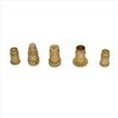
What is the difference between CNC milling and CNC turning?
Introduction:
In the world of manufacturing, there are numerous processes used to shape and manipulate raw materials into finished products. Two widely used processes are CNC milling and CNC turning. These computer numerical control (CNC) techniques have revolutionized the manufacturing industry by offering precise and efficient methods of production. While CNC milling and CNC turning are often used interchangeably, there are fundamental differences between the two processes that result in distinct advantages and applications. In this article, we will explore these differences in detail, highlighting the unique characteristics of CNC milling and CNC turning.
CNC Milling:
CNC milling is a machining process that utilizes rotary cutters to remove material from a workpiece. The workpiece is typically secured to a milling machine table, and the cutting tool, which can be either a multipoint or single point tool, is guided across the material to remove material in specific patterns and shapes. The milling machine is equipped with computer controls that dictate the tool''s movement, allowing for precise and accurate cuts. This process is particularly useful for creating intricate designs and features on three-dimensional objects.
Advantages of CNC Milling:
1. Versatility: CNC milling machines can accommodate a wide range of materials, including metals, plastics, and composites. This versatility allows for the production of various components and parts used in diverse industries such as aerospace, automotive, and medical.
2. Complex Geometries: CNC milling excels at creating complex shapes and geometries, thanks to its multi-axis capabilities. The cutting tool can move along the X, Y, and Z axes, enabling the fabrication of intricate details and contours.
3. High Precision: CNC milling machines offer exceptional accuracy and repeatability. The digital controls ensure precise tool movements, resulting in parts that meet tight tolerances and precise specifications.
4. Multiple Operations: CNC milling machines can perform various operations simultaneously, including drilling, tapping, and reaming. This capability allows for increased efficiency and reduced production time.
CNC Turning:
CNC turning, also known as CNC lathing, is a machining process used to create cylindrical parts by rotating a workpiece against a stationary cutting tool. The workpiece is mounted on a spindle, which rotates at high speeds while the cutting tool traverses along the length of the material to remove excess material and shape the part. This process is commonly used for producing symmetrical parts, such as shafts, bolts, and bearings.
Advantages of CNC Turning:
1. Efficiency: CNC turning is a highly efficient process, as it allows for the rapid removal of material from the workpiece. The continuous rotation of the material against the cutting tool results in faster production times compared to other machining techniques.
2. Cost-effective: CNC turning machines are generally more affordable and require fewer tooling components compared to CNC milling machines. This makes CNC turning a cost-effective choice for manufacturing simple cylindrical parts in large quantities.
3. Smooth Surface Finish: CNC turning produces parts with a smooth surface finish, as the cutting tool follows a continuous path along the material. This eliminates the need for additional finishing operations, saving time and reducing costs.
4. Less Material Waste: CNC turning generates less material waste compared to CNC milling. Since the cutting tool removes material from the exterior of the workpiece, there is less scrap material generated during the manufacturing process.
Key Differences between CNC Milling and CNC Turning:**
1. **Orientation: One of the primary differences between CNC milling and CNC turning is the orientation of the workpiece. In milling, the workpiece remains stationary, while the cutting tool moves across it. In turning, the workpiece rotates on a spindle, while the cutting tool remains stationary.
2. Tooling: CNC milling machines use rotary cutters with multiple cutting edges, allowing for versatile operations and complex geometries. On the other hand, CNC turning machines use single-point cutting tools, which are ideal for creating cylindrical shapes.
3. Application: CNC milling is often used for creating three-dimensional parts with intricate details and complex shapes. CNC turning, on the other hand, is primarily used for producing symmetrical cylindrical parts.
4. Material Removal: In CNC milling, material is removed from the workpiece in multiple directions, resulting in a variety of shapes and angles. In CNC turning, material is removed from the exterior of the workpiece along its length.
Conclusion:
In summary, CNC milling and CNC turning are valuable manufacturing processes that offer distinct advantages and applications. CNC milling excels at creating complex designs and features on three-dimensional objects, while CNC turning is ideal for producing cylindrical parts quickly and efficiently. Understanding the differences between these two processes allows manufacturers to choose the most suitable technique for their specific needs. Whether it is intricate designs or high-volume production, CNC milling and CNC turning continue to play integral roles in modern manufacturing.