


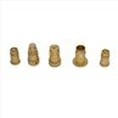
What is CNC machined parts?
CNC (Computer Numerical Control) machining is a process used to manufacture precision parts and components. CNC machines are programmable and can accurately control tools such as drills, saws, routers, and lathes to shape and finish materials. CNC machining has revolutionized the manufacturing industry by increasing efficiency, accuracy, and consistency in producing machined parts.
CNC machined parts are produced using CNC machines. These parts are widely used in various industries, including automotive, aerospace, electronics, medical, and more. They are known for their high precision, complex designs, and excellent surface finish. CNC machines are capable of producing parts with intricate details, tight tolerances, and repetitive accuracy, making them an ideal choice for demanding applications.
The CNC Machining Process
The CNC machining process involves several steps from design to final production. Understanding each step is crucial to grasp the concept of CNC machined parts fully. Let''s explore the process in detail.
1. Designing the Part:
The first step in CNC machining involves designing the part using computer-aided design (CAD) software. CAD software allows engineers to create a 3D model or a 2D drawing of the desired part. The design includes dimensions, geometric features, materials, and other specifications. The CAD file serves as a blueprint for the CNC machine to follow during the production process.
2. Programming the CNC Machine:
Once the design is complete, the next step is to program the CNC machine. CNC machines require specific instructions to operate accurately. These instructions, known as G-codes and M-codes, are created using computer-aided manufacturing (CAM) software. The CAM software translates the CAD file into a language that the CNC machine can understand. The programmer defines tool paths, cutting speeds, feed rates, and other parameters to optimize the machining process.
3. Material Selection:
After programming the CNC machine, it is time to select the appropriate material for the part. The material choice depends on the application, desired properties, and budget. Common materials used in CNC machining include metals (aluminum, steel, brass, titanium), plastics (acrylic, nylon, ABS), and composites. Each material has its own machining characteristics, such as hardness, tensile strength, and thermal conductivity, which need to be considered during the selection process.
4. Fixturing and Workholding:
Before machining begins, the material needs to be securely held in place on the CNC machine''s worktable. This is achieved using fixtures and workholding devices. Fixturing ensures the part remains stable during machining, preventing any unwanted movement or vibration. Proper fixturing is essential to maintain accuracy and prevent workpiece damage.
5. Machining Operations:
With the material securely fixed, the CNC machine carries out the programmed machining operations. This can include a variety of processes, such as milling, turning, drilling, boring, threading, and more. Each operation is performed by positioning and moving the cutting tool in precise motions dictated by the programmed instructions. The CNC machine cuts away excess material and shapes the part according to the design specifications.
6. Quality Control:
Throughout the machining process, quality control measures are implemented to ensure the finished part meets the required standards. This involves using precision measuring instruments, such as calipers, micrometers, and coordinate measuring machines (CMMs), to verify the dimensions and tolerances of the part. Any discrepancies are identified and corrected to maintain the desired accuracy.
7. Finishing and Surface Treatment:
After the part has been machined to the required specifications, it may undergo additional finishing processes. This can include deburring, polishing, sanding, painting, anodizing, or plating, depending on the desired final appearance and surface properties. These finishing processes enhance the aesthetics, corrosion resistance, and overall functionality of the part.
8. Assembly and Integration:
Once the CNC machined part is finished and any necessary surface treatments are applied, it is ready for assembly or integration into a larger system. CNC machined parts act as essential components in various assemblies, such as engines, structures, electronics, or machinery. Precise dimensions and accurate fitment of CNC machined parts ensure proper functionality and seamless integration within the final product.
Benefits and Advantages of CNC Machined Parts
CNC machining offers numerous benefits and advantages over traditional machining methods. Here are some key advantages of CNC machined parts:
1. Accuracy and Precision: CNC machines can achieve unparalleled accuracy and precision, repeatedly producing parts with tight tolerances. This ensures parts fit together perfectly and perform their intended functions reliably.
2. Complexity: CNC machines can create intricate and complex designs that would be challenging or impossible to manufacture using conventional machining methods. They can produce complex geometries, curved surfaces, and intricate patterns with ease.
3. Efficiency and Speed: CNC machining is a highly efficient process that minimizes human errors and maximizes productivity. CNC machines can operate continuously, 24 hours a day, reducing production times and increasing output.
4. Consistency and Repetitive Accuracy: CNC machines can repeatedly produce identical parts with consistent quality. This is crucial for maintaining product consistency and ensuring proper functioning in mass production settings.
5. Versatility: CNC machines can work with a wide range of materials, including metals, plastics, and composites. They can handle different shapes, sizes, and complexities, making them suitable for various industries and applications.
6. Automation and Flexibility: CNC machines are programmable, allowing for automation and uninterrupted production. Once programmed, they can produce parts without constant human supervision, freeing up operators to focus on other tasks.
7. Waste Reduction: CNC machining minimizes material waste by utilizing optimal cutting paths and reducing manual errors. This leads to cost savings and promotes sustainability by minimizing material consumption.
8. Enhanced Surface Finish: CNC machines can achieve excellent surface finishes, eliminating the need for additional surface treatments in many cases. This saves time, labor, and additional expenses.
Overall, CNC machined parts offer exceptional quality, reliability, and versatility, making them indispensable in modern manufacturing processes.
Conclusion
CNC machined parts are precision-engineered components produced using computer-controlled CNC machines. The CNC machining process involves designing the part, programming the CNC machine, selecting the material, performing machining operations, ensuring quality control, applying finishing treatments, and integrating the part into larger assemblies. CNC machined parts offer numerous advantages, including accuracy, complexity, efficiency, consistency, versatility, automation, waste reduction, and enhanced surface finish. These advantages have revolutionized the manufacturing industry, enabling the production of high-quality, complex parts for various industries and applications. CNC machining continues to advance, driving innovation and shaping the future of manufacturing.